

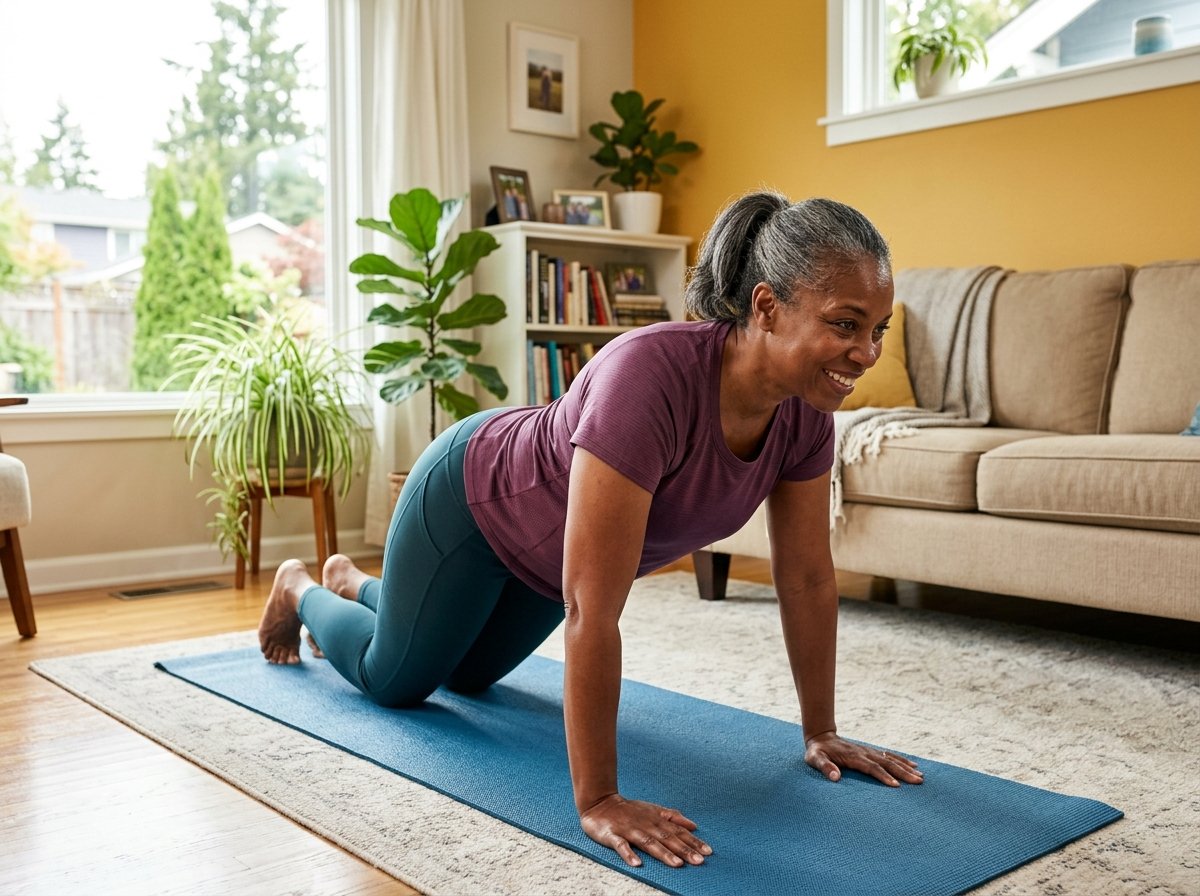
What is Calisthenics and Why is it Ideal for Midlife?
A beginner calisthenics workout plan no equipment is one of the most practical and sustainable ways to build real strength, improve posture, and support your energy levels — right from your living room in Warsaw, Indiana, or anywhere else life takes you.
Here is a simple overview of what a beginner no-equipment calisthenics plan looks like:
| Movement Pattern | Beginner Exercise | What It Builds |
|---|---|---|
| Push | Wall push-up / Incline push-up | Upper body strength, posture |
| Squat | Bodyweight squat / Sumo squat | Leg strength, mobility |
| Hinge | Glute bridge / Superman | Posterior chain, lower back |
| Core | Knee plank / Hollow body hold | Stability, balance |
| Lunge | Reverse lunge / Lateral lunge | Single-leg strength, coordination |
| Rotation | Squat with rotation | Functional movement, flexibility |
A solid beginner program trains 3 days per week, starts with 2 to 3 sets of 8 to 12 reps per exercise, includes a 5 to 10 minute warm-up, and builds progressively over 4 to 8 weeks — no gym, no weights, and no intimidating equipment needed.
The gym can feel overwhelming, and quality equipment is expensive. But here is something worth knowing: research has shown that 8 weeks of consistent calisthenics training can meaningfully improve strength, reduce fat mass, and enhance posture. Your body and gravity are genuinely enough to get started. For women navigating midlife, that is an empowering place to begin — because this kind of training works with how your body moves in real life, not against it.
This approach focuses on long-term strength, mobility, and sustainable progress. It is about building a foundation that supports your strength, your brain health, and your spirit for the long haul.
I am a Certified Personal Trainer, Functional Movement Specialist, and Functional Aging Specialist with over 20 years of experience helping women build sustainable fitness through a spirit, mind, and body approach — and a beginner calisthenics workout plan no equipment is one of the first tools you can use to get started safely. You can begin a program at any age and at any time. Knowing your body is the first step!
A Simple, Practical Definition of Calisthenics
Calisthenics is a form of bodyweight training that uses your own body and gravity to create resistance. It may sound like something reserved for advanced athletes, but for beginners, it is much more approachable than that. In practice, it means learning basic movement patterns like squats, lunges, pushes, and core bracing so you can build strength, stability, and everyday function without needing any equipment.
For women navigating the midlife season, calisthenics (or movement patterns) offer a unique advantage because it is inherently joint-friendly. Unlike heavy external weights that can sometimes place undue stress on sensitive joints, bodyweight exercises allow you to move through a natural range of motion. This builds functional strength that translates directly to your daily life, whether you are reaching for a high shelf, playing with grandchildren, or maintaining your balance on a walk through Winona Lake, Indiana, or anywhere you go!
Because you do not need a gym membership or bulky machines, calisthenics removes the common barriers to entry. You can progress at your own pace, focusing on the quality of each movement rather than the amount of weight on a bar. This focus on “beauty of movement” is actually where the word comes from—derived from the Greek words kalos (beauty) and sthenos (strength). By choosing personalized fitness programs that utilize these principles, you are investing in a form of exercise that honors your body’s current abilities while gently pushing the boundaries of what you can achieve.
The Whole-istic Benefits of a Beginner Calisthenics Workout Plan No Equipment
The benefits of a beginner calisthenics workout plan no equipment extend far beyond just building muscle. We believe in a whole-istic approach that nurtures the spirit, mind, and body together. Physically, bodyweight training is exceptionally effective for improving posture and core stability. According to scientific research on calisthenics and posture, consistent training can correct muscle imbalances that lead to slouching or back discomfort, which often become more prevalent as our bodies change in midlife.
From a cognitive perspective, learning new movement patterns and coordinating your limbs in space acts as a powerful workout for your brain. This “mind-muscle connection” is a key component of fitness after 50, helping to maintain cognitive health and neuroplasticity. When you focus on the precision of a squat or the stability of a plank, you are practicing a form of moving meditation that can significantly aid in stress management.
Furthermore, calisthenics builds muscular endurance and cardiorespiratory fitness. By performing circuits with minimal rest, you improve your heart health and stamina without the high-impact stress of running. This balanced approach ensures you feel energized rather than depleted after your session, supporting a positive mood and a stronger sense of self-confidence.
Essential Foundations: Preparing Your Body and Space
One of the greatest joys of calisthenics is that your training ground can be as small as a yoga mat. Whether you are in a cozy apartment in Warsaw, Indiana, or traveling across the continental United States, you have everything you need. To set yourself up for success, find a clear area where you can extend your arms and legs fully without hitting furniture.
Before you begin moving, consider your internal foundation. Nutrition plays a vital role in how your body responds to exercise. We emphasize clean eating and an awareness of the glycemic index to keep your energy levels stable. Ensuring adequate protein intake is also essential for muscle repair and metabolic health as we age. Hydration is equally important; aim for 2 to 3 liters of water daily to keep your fascia hydrated and your joints lubricated.
If you are feeling unsure about where to start or how to navigate physical limitations, we are here to help. You can book a Personalized Fitness Assessment to receive expert guidance tailored to your unique needs. For those who value the convenience of staying home, our virtual training options provide the same high level of expertise and accountability through a remote platform.
Foundational Exercises for Your Beginner Calisthenics Workout Plan No Equipment
Mastering the basics is the key to long-term success. We focus on quality over quantity, ensuring every repetition serves a purpose. Start with exercises that allow you to maintain a neutral spine and a braced core.
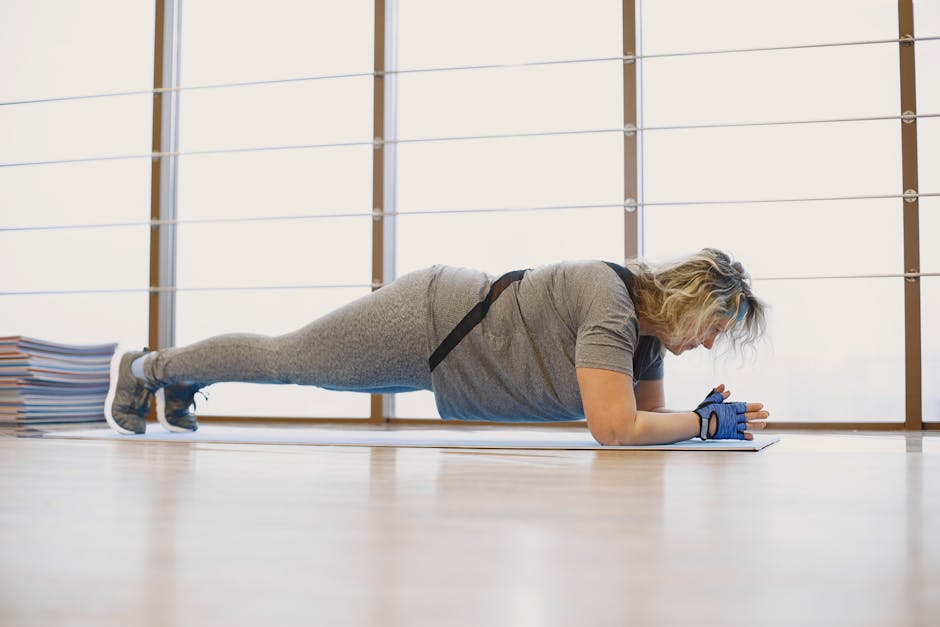
Research has highlighted the incredible versatility of simple movements. For instance, scientific research on push-up benefits from Harvard Health suggests that push-ups are an excellent indicator of overall functional health and upper body strength. For beginners, we often start with wall push-ups or incline push-ups against a sturdy counter to ensure the shoulders are protected while building the necessary strength.
Core stability is another pillar of our program. Rather than traditional crunches, we focus on core exercises for women that emphasize stability, such as the hollow body hold or the bird-dog. These movements protect the lower back and improve your balance in everyday activities.
Key Movement Progressions
Progression in calisthenics does not come from adding weight, but by changing the leverage or the range of motion of an exercise. Use the table below to understand how to adjust movements to your current level.
| Exercise | Regression (Easier) | Standard | Progression (Harder) |
|---|---|---|---|
| Squat | Chair-assisted squat | Bodyweight squat | Sumo squat / Pulse squat |
| Push-up | Wall push-up | Incline (table) push-up | Knee push-up |
| Lunge | Static split squat | Reverse lunge | Lateral lunge |
| Plank | Elevated plank (on table) | Knee plank | Full forearm plank |
| Core Strength | Glute bridge (feet flat) | Glute bridge (heels down toes lifted) | Single leg bridge |
Structuring Your Beginner Calisthenics Workout Plan No Equipment
Consistency beats intensity every time, especially when you are just starting out. We recommend a frequency of 3 days per week, allowing at least one full day of rest between strength sessions. This cadence provides your muscles and nervous system the time they need to recover and grow stronger. On your off days, we encourage “active recovery,” such as a gentle walk through your neighborhood or some light stretching.
As we focus on active aging, it is important to listen to your body’s signals. If you experience joint pain, it is a sign to regress the movement or check your form. Working with one-on-one fitness coaching can be incredibly beneficial here, as a specialist can provide real-time adjustments to ensure you are training safely and effectively.
Sample Weekly Schedule
A balanced week should include strength, flexibility, and a touch of cardiorespiratory work. Here is a sample structure you can follow:
- Monday: Full-Body Strength Circuit (Squats, Incline Push-ups, Glute Bridges, Knee Planks). Perform 2 to 3 rounds of 10 reps each.
- Tuesday: Active Recovery (20-minute walk) and general flexibility work.
- Wednesday: Full-Body Strength Circuit. Focus on slow, controlled descents (the “eccentric” phase) to build more strength.
- Thursday: Active Recovery or a short HIIT for beginners session (e.g., 30 seconds of high knees, 30 seconds of rest for 10 minutes).
- Friday: Full-Body Strength Circuit. Try adding one extra repetition to each set if you feel strong.
- Saturday: Pilates-inspired core work and deep stretching.
- Sunday: Full Rest and reflection on your progress.
Navigating Common Challenges and Brain Health
One of the most common hurdles for beginners is the fear of doing it “wrong.” We want to shift that perspective: every movement is an opportunity to learn. Form mastery is a lifelong journey, not a destination. By focusing on your breathing—exhaling on the effort and inhaling on the release—you naturally engage your core and protect your spine.
As a Certified Brain Health Trainer, I often remind my clients that physical exercise is one of the best ways to manage stress and support brain longevity. When you navigate a new exercise, you are creating new neural pathways. This reduces the impact of cortisol (the stress hormone) on the brain, leading to better focus and a more peaceful state of mind.
If you find yourself hitting a plateau, do not get discouraged. Progress is rarely a straight line. One effective way to break through plateaus is slowing down each movement or focusing on a different variation. The goal is to improve strength, balance, and daily movement so you feel capable in everyday life—feeling capable and vibrant in your own skin.
Frequently Asked Questions about Beginner Calisthenics
How long does it take to see results from a beginner calisthenics program?
Most people begin to feel a difference in their energy levels and “mind-muscle connection” within the first two weeks. Visible changes in muscle tone and significant improvements in posture typically emerge after 8 weeks of consistent training. Internal progress, like improved mood and better sleep, often happens much sooner!
Can calisthenics be done in small spaces or at home?
Absolutely. One of the primary benefits of a beginner calisthenics workout plan no equipment is its minimal space requirement. If you have enough room to lie down on the floor and reach your arms out to the sides, you have plenty of space to complete a full-body routine. This makes it ideal for home life or even while traveling.
How can I progress from basic exercises to more advanced ones?
Progression happens in several ways: increasing the number of repetitions, adding another set, decreasing the rest time between exercises, or choosing a more challenging variation (like moving from a wall push-up to an incline push-up). We recommend only changing one variable at a time to allow your body to adapt safely.
Conclusion
Embarking on a beginner calisthenics workout plan no equipment is a powerful step toward long-term longevity and empowerment. By using your own body as the ultimate fitness tool, you are building a foundation of strength that is uniquely yours. This journey is about more than just physical change; it is about nurturing your spirit, mind, and body so you can show up fully for the people and activities you love.
At Personalized Fitness For You, I am here to support you every step of the way. Whether you are looking to improve functional health, manage stress, or build a sustainable exercise routine, she offers expert guidance and compassionate accountability. Personalized Fitness For You serves local women from her studio in Winona Lake, Indiana, and also works with women across the country through specialized virtual programs.
Ready to start your journey with expert guidance? Contact Joy today to build a personalized plan that fits your body and your lifestyle.


