

Why Beginner Core Exercises for Women Are the Starting Point for Lasting Strength
Beginner core exercises for women are one of the most effective ways to build a foundation of strength, stability, and confidence that supports everything you do — from carrying groceries to sitting comfortably at your desk for hours. Here is a quick look at the best beginner-friendly core exercises to get you started:
- Dead Bug – Trains spinal stability and coordination without straining the lower back
- Bird Dog – Builds balance and posterior chain strength through controlled extension
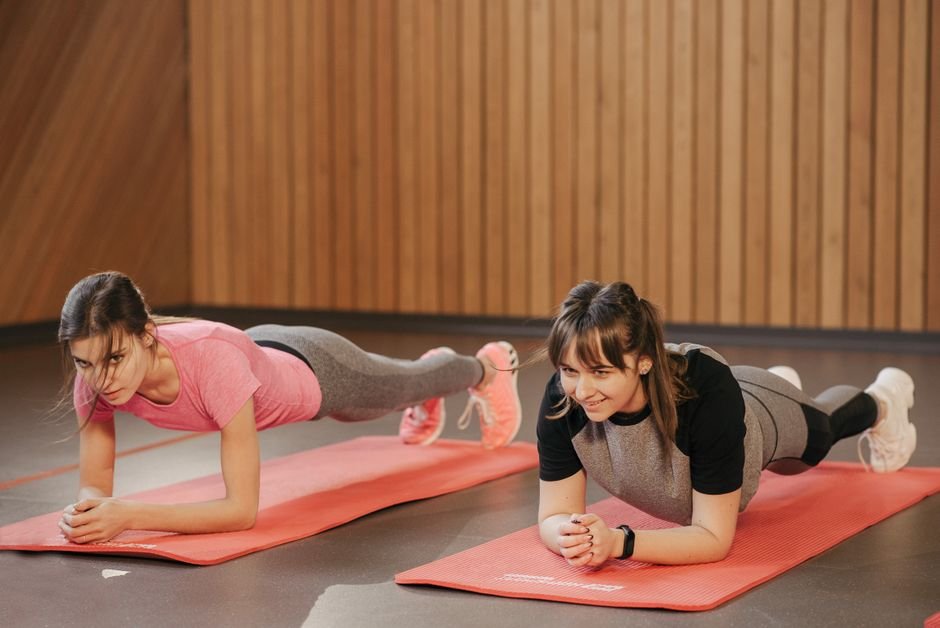
- Modified Forearm Plank – Develops full-core endurance with a knee modification for beginners
- Glute Bridge – Activates the glutes and stabilizes the pelvis for hip strength
- Pelvic Tilts – Gently engages the deep core through breathwork and spinal mobility
- Modified Side Plank – Targets the obliques and lateral stability with joint-safe form
- Pilates Toe Taps – Focuses on lower abdominal control with precise, intentional movement
Many women spend years exercising without ever truly feeling their core muscles activate — and that disconnect matters more than most people realize. A strong core is not about chasing flat abs or pushing through endless crunches. For women navigating the different seasons of life, it is about building the deep, functional strength that protects your spine, improves your posture, and makes everyday movement feel easier and more confident. Research and clinical exercise guidance support strengthening the muscles around the abdomen, back, and pelvis to improve movement and reduce back discomfort.
I’m Joy Grout, a certified personal trainer and functional aging specialist with over 20 years of experience helping women build strength and whole-istic well-being — and guiding clients through beginner core exercises for women is a great place to start, whether we’re working together at the studio in Winona Lake, Indiana, or virtually throughout the continental United States. In the sections ahead, I’ll walk you through the exact exercises, form tips, and a simple routine you can begin today.
Meeting yourself where you are and building beyond is so important. Building from the Core up!
Every session at Personalized Fitness For You is customized whole-istically!
Why Your Core is the Foundation of Whole-istic Health
When we talk about the core, many of us immediately think of the “six-pack” muscles. However, your core is actually a complex system of muscles that wrap around your entire midsection like a natural weight belt. This includes the transverse abdominis (the deepest layer), the internal and external obliques, the erector spinae along your back, and even your pelvic floor and diaphragm. There are so many muscles that make up the Core!
These muscles are the unsung heroes of active aging. They stabilize the spine and pelvis, allowing you to move with grace and power. A weak core often forces the lower back to overcompensate, leading to that all-too-familiar ache after a day of gardening or sitting at a desk. By focusing on core stability, you are essentially protecting your long-term mobility and independence.
Beyond physical support, a strong core improves your balance and coordination, which are critical for longevity and preventing falls. It also supports better breathing and pelvic health. If you are ready to stop guessing and start building a foundation that lasts, I invite you to book a Personalized Fitness Assessment with us to see how we can tailor these movements to your specific needs. You can also explore our improve core stability guide for deeper insights into how these muscles function together.
7 Essential Beginner Core Exercises for Women
The following exercises are designed to be performed at home with no equipment, making them perfect for starting your journey today. These movements prioritize quality over quantity, focusing on “turning on” the muscles that may have been dormant for years. If you’re looking for even more variety, check out our list of 9 core exercises for women to keep your routine fresh.
1. The Dead Bug
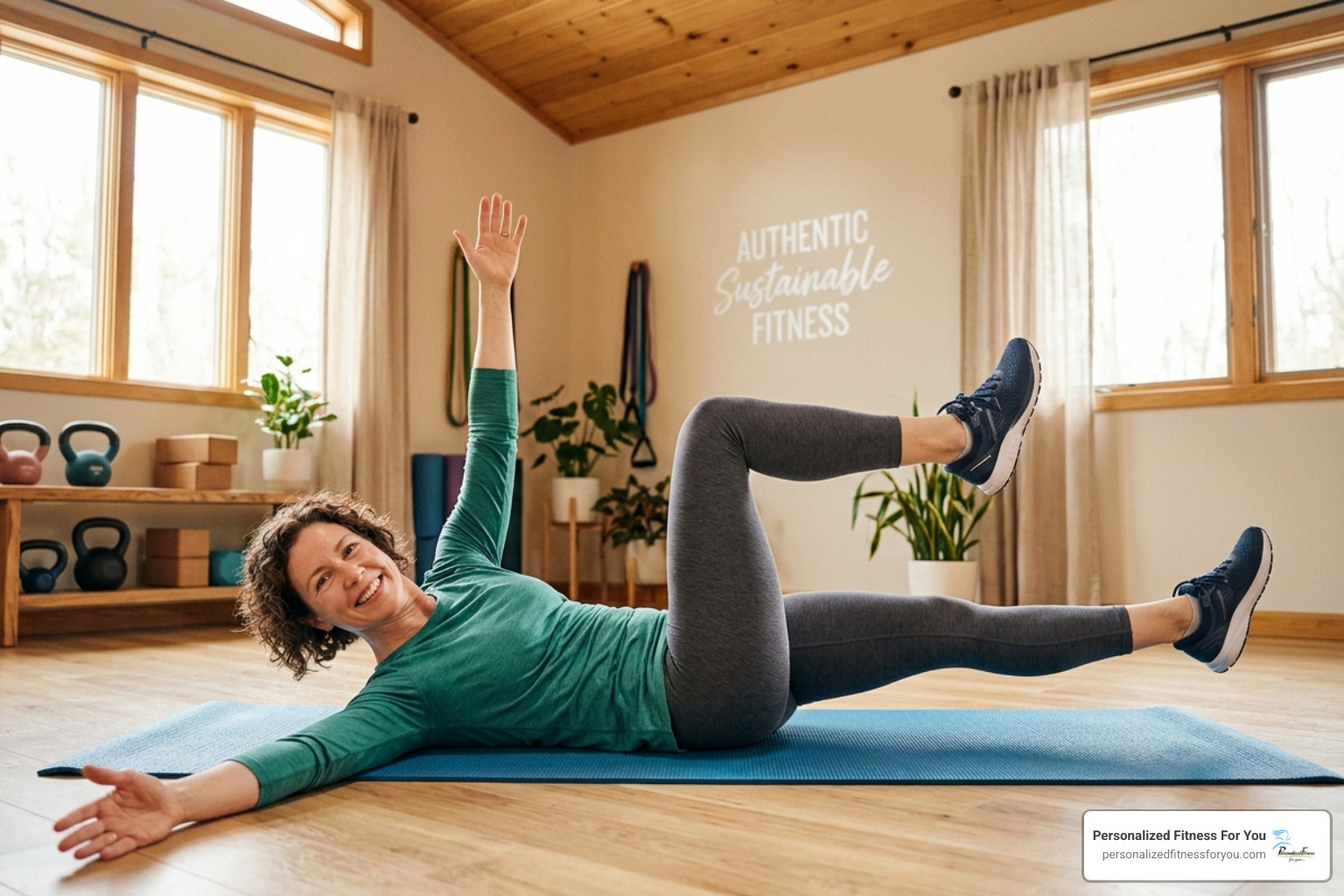
The Dead Bug might have a funny name, but it is incredibly effective for teaching your core how to stabilize the spine while your limbs are moving. It is beginner-friendly because your back is supported by the floor, which can make spinal control easier to learn.
- How to do it: Lie on your back with your arms reaching toward the ceiling and your knees bent at a 90-degree angle (tabletop position). Slowly lower your right arm behind your head while simultaneously extending your left leg toward the floor.
- The Key: Only go as low as you can without your lower back arching off the mat. Exhale as you extend to keep your ribs “knitted” together. Return to center and switch sides.
2. Bird Dog
This exercise builds balance and targets the posterior chain (the muscles along the back of your body). It is excellent for anti-rotation, meaning it teaches your core to resist wobbling.
- How to do it: Start on all fours with a flat back. Extend your right arm forward and your left leg straight back. Hold for two seconds, focusing on keeping your hips level with the floor.
- The Key: Imagine there is a glass of water resting on your lower back that you cannot spill. This helps maintain a neutral spine and prevents your hips from tilting.
3. Modified Forearm Plank
The plank is the gold standard for core endurance, but a full plank can sometimes be too much for the shoulders or lower back when you are just starting. A modified version on the knees allows you to build strength safely.
- How to do it: Rest on your forearms and knees, creating a straight line from your head to your knees. Squeeze your glutes and pull your belly button toward your spine.
- The Key: Keep your hips level without letting them sag or lift too high. Aim for 15-30 seconds of perfect form rather than a minute of struggling.
4. Glute Bridge
Strong glutes are essential for a healthy core. The glute bridge helps stabilize the pelvis and supports the lower back, which is vital for muscle preservation as we navigate midlife.
- How to do it: Lie on your back with feet flat on the floor, hip-width apart. Squeeze your glutes to lift your hips toward the ceiling until your body forms a straight line from shoulders to knees.
- The Key: Press through your heels and avoid over-arching your lower back at the top. This is a great precursor for those eventually looking into weighted core exercises for women.
5. Pelvic Tilts
This is a gentle but powerful movement that focuses on the deep transverse abdominis and spinal mobility. It is often used in post-rehabilitation to help women reconnect with their core.
- How to do it: Lie on your back with knees bent. As you exhale, gently flatten your lower back against the floor by tilting your pelvis toward your face. Inhale to return to a neutral position.
- The Key: This is a small, subtle movement. Focus on the breath and the feeling of your deep abdominal muscles pulling inward.
6. Modified Side Plank
Lateral stability is often overlooked, but it is crucial for balance and protecting your spine during side-to-side movements. This modified version protects the shoulder and hip joints.
- How to do it: Lie on your side propped up on your forearm with your knees bent and stacked. Lift your hips off the mat so your body forms a straight line from head to knees.
- The Key: Keep your chest open and your elbow directly under your shoulder to avoid joint pain.
7. Pilates Toe Taps
This exercise comes from the Pilates tradition and is fantastic for targeting the lower abdominals. It requires precision and control to keep the pelvis steady.
- How to do it: Start in a tabletop position (knees at 90 degrees). Slowly lower one foot to tap the floor, then bring it back up using your deep core muscles.
- The Key: Maintain the 90-degree angle in your knee; the movement should come from the hip socket. If your back starts to lift, don’t tap the floor all the way.
For those who want a structured path forward, our personalized fitness programs offer a step-by-step approach to mastering these moves.
Navigating Your Routine: Form and Progression Tips
As we practice beginner core exercises for women, the “how” is much more important than the “how many.” 10 minutes of focused, intentional movement is worth an hour of mindless repetitions.
The Importance of a Neutral Spine
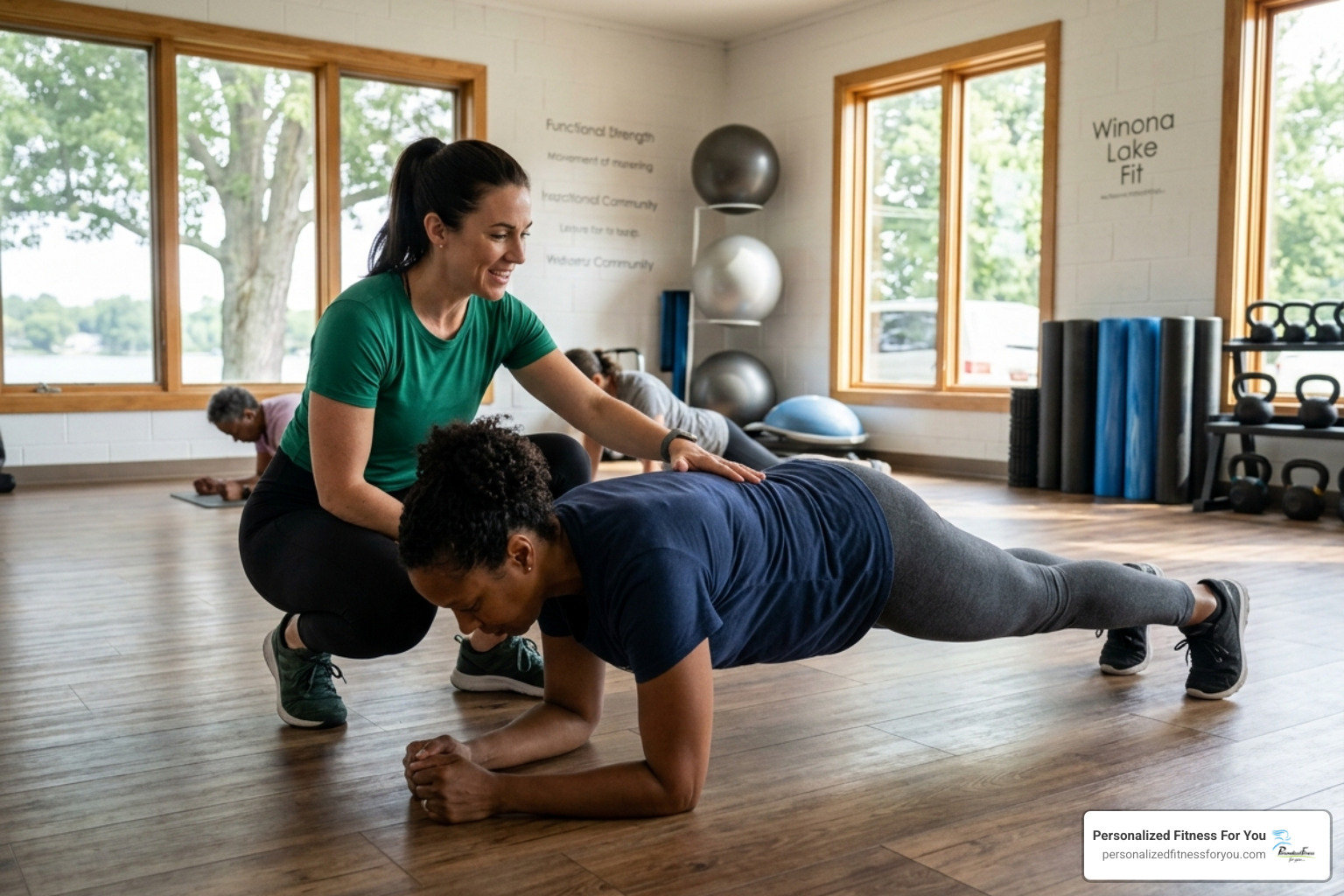
A neutral spine is the natural curve of your back where your vertebrae are stacked safely. During core work, we want to avoid “tucking” too hard or arching excessively. Imagine your pelvis is a bowl of water; you want to keep the water from spilling out the front or the back.
Diaphragmatic Breathing
Never hold your breath during core exercises! This creates internal pressure that can actually weaken the pelvic floor. Instead, practice “inhaling into your sides and back” and exhaling as you perform the hardest part of the movement. This “exhale on exertion” helps naturally engage your deep stabilizers.
Static vs. Dynamic Core Work
It is helpful to understand the difference between holding a position and moving through one. Both are necessary for a well-rounded routine.
| Exercise Type | Primary Goal | Example |
|---|---|---|
| Static | Builds endurance and stability | Modified Forearm Plank |
| Dynamic | Builds functional strength and coordination | Dead Bug or Bird Dog |
Consistency is your best friend. Start with 2-3 sessions per week. As you get stronger, you can progress by increasing your hold times by 5 seconds or adding a second round of the exercises. If you can’t make it to the studio, our virtual training throughout the continental United States options allow us to check your form and provide real-time adjustments from the comfort of your home.
Integrating Core Work into Your Active Lifestyle
A strong core doesn’t just exist for the 15 minutes you are on the mat; it should support your entire “spirit, mind, and body” philosophy. For women over 40, fitness is one piece of a larger whole-istic puzzle.
- Clean Eating and Protein: To build and preserve muscle, your body needs high-quality fuel. Focus on a clean eating approach with plenty of lean protein. Protein is the building block of muscle, and as our hormones shift during midlife, getting enough of it becomes even more critical.
- The Glycemic Index: Choosing foods with a lower glycemic index helps maintain steady energy levels throughout the day, preventing the “sugar crashes” that can make a workout feel impossible.
- Stress Management: High levels of cortisol (the stress hormone) can lead to increased abdominal fat and muscle breakdown. Incorporating gentle flexibility work or mindfulness into your day can actually help your core training be more effective.
Whether you choose training in the studio or prefer the convenience of virtual coaching throughout the continental United States, the goal is to create a sustainable lifestyle that honors your body’s changing needs.
Frequently Asked Questions about Core Training
How often should I do beginner core exercises?
For most beginners, we recommend performing these exercises 2 to 3 times per week on non-consecutive days. This allows your muscles time for repair and recovery. Your core muscles are like any other muscle group — they need rest to grow stronger!
Are beginner core exercises safe for everyone?
While these exercises are generally very safe, women with specific physical limitations or those in post-rehabilitation should always navigate their routine with care. If you have health concerns, work with a qualified trainer who can adjust each movement to your body and goals. Always seek physician clearance before starting a new routine if you have a history of surgery or chronic pain.
Can I do these exercises at home without equipment?
Absolutely! One of the best things about beginner core exercises for women is that your own body weight provides plenty of resistance to start. A simple mat is all you need. If you find you need more accountability or specific modifications, our virtual coaching serves women throughout the continental United States, while our Winona Lake, Indiana studio is open for those in the Kosciusko County area.
Conclusion
Building a strong core is an investment in your future self. It is about more than just aesthetics; it is about the longevity of your spine, the health of your joints, and the confidence to keep saying “yes” to the activities you love. Whether you are running or walking the trails in Winona Lake, Indiana or playing with your grandchildren, a stable foundation allows you to move through life with ease.
At Personalized Fitness For You, we believe in a shame-free, whole-istic approach to fitness that honors where you are today while preparing you for a vibrant tomorrow. With the right guidance, you can build strength, improve stability, and support your body through each season of life.
Ready to build core strength with expert guidance? Contact Joy today to book your Personalized Fitness Assessment and start a beginner fitness routine designed for your body, goals, and confidence.