

Why Your Bones Need More Than Just Calcium
Osteoporosis and strength training might sound like an unlikely pair, but they are a powerful combination for protecting your bones. By creating mechanical stress that signals bone-building cells to get to work, strength training directly stimulates bone growth. In fact, research shows that a consistent routine performed two to three times per week at a moderate to high intensity can increase bone density by 1-3% in key areas like the spine and hips. At the same time, it improves the muscle strength needed to protect your bones and enhances the balance and coordination essential for preventing falls and fractures.
Right now, more than eight million women in the United States have osteoporosis. This condition causes bones to become weak and brittle, leading to over two million fractures each year. Many women lose up to 50% of their muscle mass as their body changes, which accelerates bone loss even further.
But here’s the good news: you don’t have to accept weak bones as inevitable. Research shows that consistent resistance training can slow bone loss and even reverse it in some cases. When you lift weights or work against resistance, you create mechanical forces that tell your bones to get stronger. Your muscles pull on your bones, and your bones respond by building new tissue.
This isn’t about becoming a bodybuilder. It’s about creating sustainable strength that supports your independence and vitality for years to come. Whether you’re dealing with osteoporosis, osteopenia, or simply want to prevent bone loss before it starts, strength training offers a proven path forward.
As Joy Grout, a Bone Health and Osteoporosis Instructor with over 20 years of experience helping women build resilient bodies, I’ve seen how powerful osteoporosis and strength training can be when approached with the right guidance and support. My work combines evidence-based exercise with a whole-istic approach that honors where you are right now while helping you build the strength you need for tomorrow.
Understanding Osteoporosis and Its Impact on Your Health
When your bones start losing density, they begin to resemble a honeycomb with increasingly larger holes. This is what happens with osteoporosis—a condition where your bones gradually become porous and fragile, making them vulnerable to breaks and fractures that can happen from something as simple as a sneeze or a gentle bump.
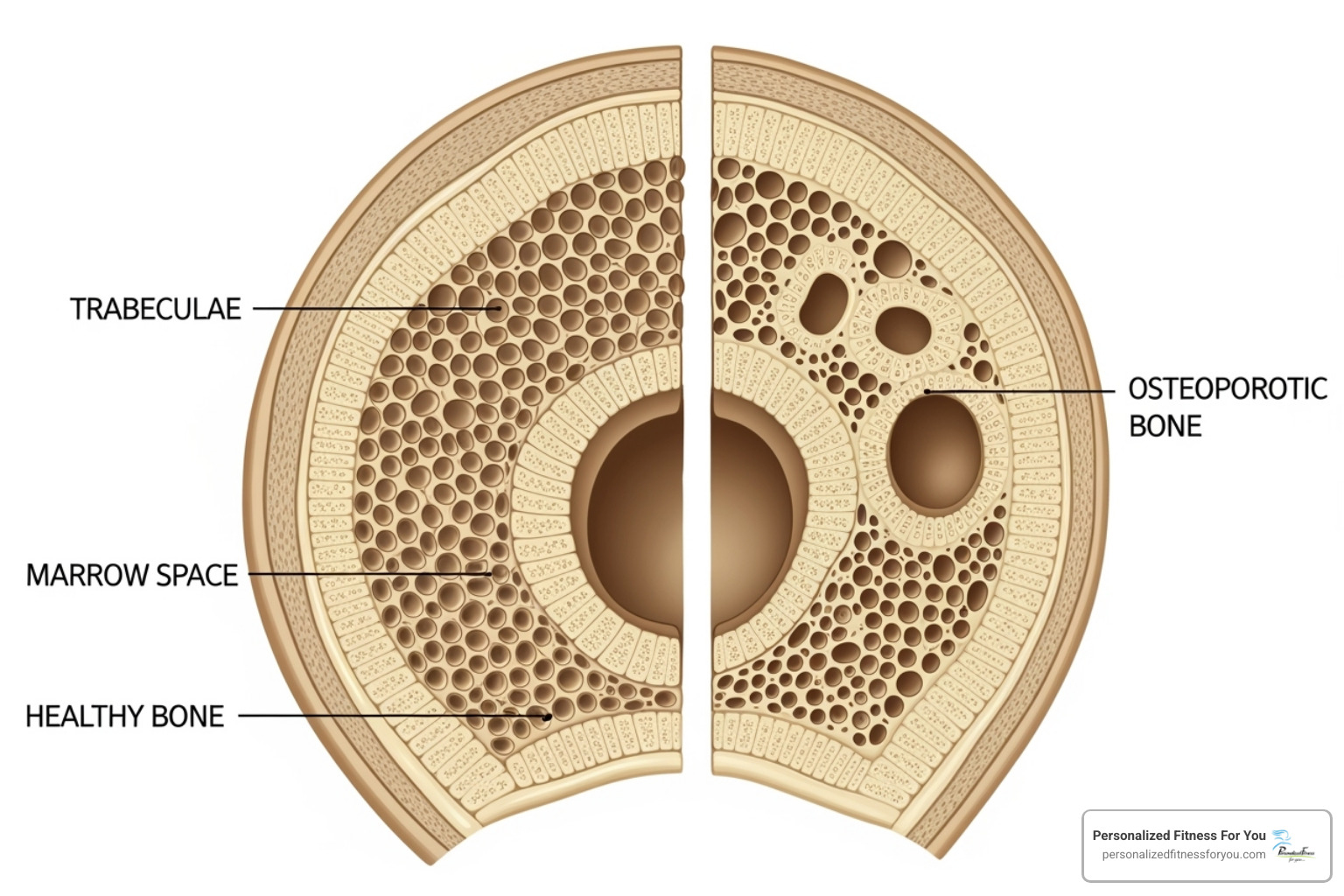
Think about bones that were once strong and dense, capable of supporting you through every activity. With decreased bone mass, those same bones become brittle and weak. This isn’t just about numbers on a scan—it translates to real consequences in your daily life.
The statistics paint a sobering picture. More than two million fragility fractures occur each year in the United States because of osteoporosis. These fractures most commonly affect your hips, spine, and wrists—the very areas you rely on for independence and mobility.
The impact goes far beyond the initial break. Six out of ten people who fracture a hip never fully regain their previous level of independence. Walking across a room without assistance might become impossible. Chronic pain becomes a constant companion. Your posture can change dramatically, creating that stooped or hunched appearance that affects not just how you look, but how you breathe and move.
This loss of independence represents one of the most significant health concerns associated with osteoporosis. Simple activities you’ve always taken for granted—reaching for something on a shelf, carrying groceries, playing with grandchildren—can suddenly feel risky or impossible.
For women, the concern becomes even more pressing as your body changes. Hormonal shifts, particularly the decline in estrogen that happens during midlife, can dramatically accelerate bone loss. Some women lose up to 20% of their bone density in the first five years after menopause begins. This is why osteoporosis and osteopenia (lower bone density that hasn’t yet reached osteoporosis levels) are so common among women navigating midlife and beyond.
The good news? Understanding how osteoporosis affects your body is the first step toward protecting yourself. And that’s where osteoporosis and strength training come together as a powerful prevention strategy. You don’t have to accept bone loss as an inevitable part of aging—you can take action to build stronger, more resilient bones at any stage of life.
The Science Behind How Strength Training Builds Stronger Bones
Here’s something that might surprise you: your bones aren’t solid, unchanging structures. They’re living, breathing tissue that constantly rebuilds itself. And just like your muscles, they respond to how you use them. This is where osteoporosis and strength training becomes such a game-changer.
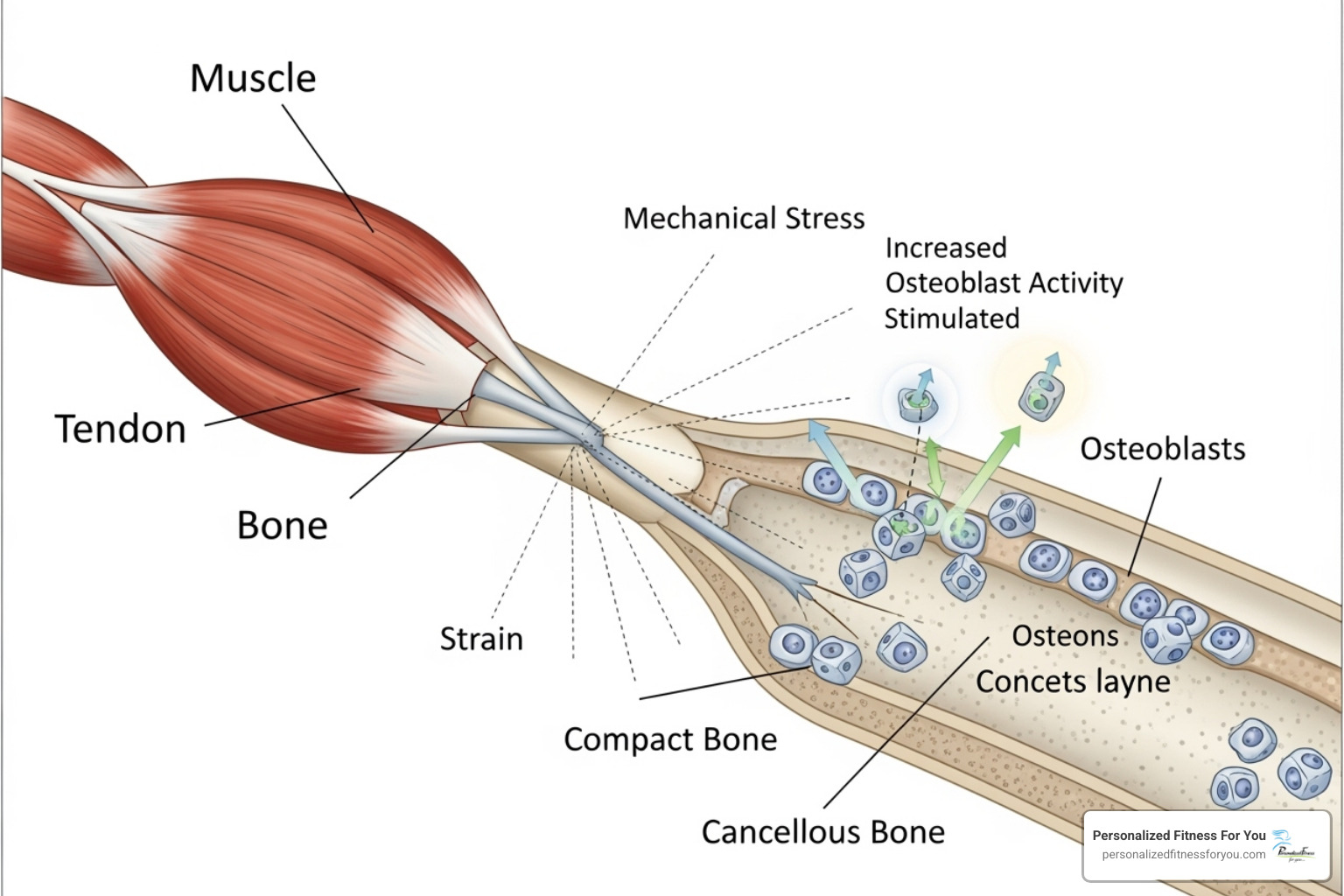
The science behind this is actually quite neat. There’s a principle called Wolff’s Law that explains how bone adapts to the loads you place on it. When you create mechanical stress through strength training, your bones don’t just endure itthey respond by getting stronger and denser.
Think about what happens when you perform a squat or a row. Your muscles contract with force, and as they do, they pull on the bones they’re attached to. This creates tension and pressure that your bones can actually sense. Deep within your bone structure live specialized cells called osteocytes, which act like tiny mechanosensors. They detect this stress and send signals to other cells called osteoblasts, your body’s bone-building crew.
This is the muscle-bone connection in action. The stronger your muscles become, the greater the forces they exert on your bones during movement. And the more force your bones experience, the more they’re stimulated to build new tissue. It’s a beautiful partnership where increased muscle strength directly supports better bone health.
But there’s even more happening at the cellular level. When you engage in resistance exercise, your body actually reduces the production of a protein called sclerostin, which normally inhibits bone formation. By reducing sclerostin, strength training essentially removes the brakes from your bone-building process. Your osteoblasts get the green light to produce new bone tissue while simultaneously decreasing bone resorption.
A 2018 study demonstrated that regular physical exercise, including strength training, increased both bone mineralization and muscle strength. This wasn’t just about slowing down bone loss. The research showed actual improvements in bone density, proving that resistance exercise helps build and maintain stronger bones throughout life. You can read more in this 2018 study.
This is why strength training is such a powerful approach. You’re not just hoping to preserve what you have. You’re actively stimulating your body’s natural ability to build resilient, healthy bone tissue. Your bones are designed to respond to challenge, and when you provide that challenge consistently and safely, they rise to meet it.
Your Guide to Osteoporosis and Strength Training Exercises
Building stronger bones isn’t about complicated routines or expensive equipment. It’s about understanding what your bones need and giving them the right kind of challenge. When we talk about osteoporosis and strength training, we’re focusing on exercises that create mechanical stress on your bones, particularly in the areas most vulnerable to fractures: your hips, spine, and wrists.
The most effective approach combines weight-bearing impact activities with progressive resistance training. Progressive resistance simply means gradually increasing the challenge over time. Maybe you start with bodyweight exercises, then add resistance bands, and eventually progress to using free weights. This steady progression is what signals your bones to keep building and strengthening.
Best Strength Training Exercises for Bone Building
The beauty of strength training for bone health is that you have options. You can use free weights like dumbbells or kettlebells, resistance bands, or simply your own bodyweight. What matters most is that you’re creating that essential mechanical stress that tells your bones to get stronger.
Squats are foundational because they load your femur and spine directly while strengthening your hips, thighs, and lower back. You might begin with chair squats, using a sturdy chair behind you for confidence, then progress to bodyweight squats, and eventually add weights. Lunges work similarly, targeting those critical hip and thigh bones while improving your balance and coordination.
For your upper body, overhead presses strengthen the bones in your arms, shoulders, and upper spine. These areas are often overlooked, but they’re vital for maintaining independence in daily activities. Rows, whether you’re using resistance bands, dumbbells, or a weight machine, build strength through your upper back and shoulders. This not only supports your spine but also helps improve posture, which becomes increasingly important as our bodies change.
Modified push-ups deserve special mention because they can be adapted to any fitness level. Start against a wall, progress to an liftd surface like a sturdy table, then move to your knees, and eventually to your toes if that feels right for your body. They strengthen your chest, shoulders, and arms while providing beneficial stress through your wrists, another common fracture site.
Research backs up what we see in practice. A 2015 study found that consistent resistance training over six months led to significant improvements in bone mineral density in the lumbar spine, with participants seeing an average increase of 1.82%. That’s real, measurable bone growth from simply showing up and doing the work.
Functional Exercises for Daily Life and Osteoporosis and Strength Training
Functional fitness is about more than just building bone density. It’s about making your everyday life easier, safer, and more confident. These exercises mirror the movements you do every day, which means the strength you build translates directly into real-world capability.
Sit-to-stands might seem simple, but they’re incredibly powerful. Every time you practice getting up from a chair without using your hands, you’re strengthening the exact muscles and bones you need for that movement in daily life. This exercise targets your legs and hips while improving your balance, making you less likely to lose your footing when standing up.
Stair climbing places beneficial stress on the bones of your legs and hips, similar to walking uphill. If you don’t have stairs at home, a single sturdy step works beautifully for step-ups, which target your femur and lower leg bones while building practical strength.
Farmer’s walks are wonderfully straightforward: hold a weight in each hand and walk. This simple exercise strengthens your grip, engages your core, and improves your overall stability. It’s exactly the kind of functional strength you need when carrying groceries or luggage.
These functional movements do more than build bone density. They reduce your risk of falls by improving your balance and coordination. They build the confidence you need to move through your day without fear. That confidence is priceless when it comes to maintaining your independence and vitality.
Comparing Strength Training to Other Exercises for Osteoporosis and Strength Training
Understanding how different types of exercise affect your bones helps you make informed choices about your fitness routine. While all movement is beneficial, some activities are significantly more effective for bone health than others.
| Exercise Type | Primary Bone Density Impact | Muscle Strength Gains | Balance Improvement | Best For |
|---|---|---|---|---|
| Strength Training | High (especially spine & hips) | High | Moderate to High | Building bone density and preventing fractures |
| Weight-Bearing Aerobics (walking, dancing, hiking) | Moderate | Low to Moderate | Moderate | Cardiovascular health and maintaining bone density |
| Non-Weight-Bearing Exercise (swimming, cycling) | Low | Low to Moderate | Low | Cardiovascular fitness without joint stress |
Strength training stands out because it delivers the highest impact on bone density while simultaneously building muscle strength and improving balance. This triple benefit makes it superior for addressing osteoporosis specifically. However, this doesn’t mean you should abandon other forms of exercise. Walking, dancing, and hiking all contribute to bone health while supporting your cardiovascular system.
The ideal approach combines osteoporosis and strength training with weight-bearing aerobic activities. You might do resistance training two to three times per week and fill in other days with brisk walks or dance classes. This combination gives you the bone-building benefits of strength training plus the cardiovascular and mood benefits of aerobic activity.
Swimming and cycling, while excellent for heart health and gentle on joints, don’t provide the mechanical stress bones need to grow stronger. They have their place in a balanced fitness routine, especially if you have joint concerns, but they shouldn’t be your only form of exercise if bone health is a priority.
Conclusion
Strength training isn’t just about building muscle; it’s about building a resilient body and a confident future, especially when facing osteoporosis. You have the power to proactively strengthen your bones, improve your balance, and maintain your independence for years to come.
Don’t wait to take control of your bone health. At Personalized Fitness For You, we specialize in crafting custom strength training programs designed specifically for individuals managing osteoporosis. Our expert guidance ensures you train safely and effectively, changing your health journey into one of empowerment and lasting vitality.
Ready to start your personalized path to stronger bones and a more active life? Contact Joy today to schedule your consultation and begin building your resilient future.


