


Health Benefits of Sweet Potato: Nutrients, Digestion, Vision, and More
The health benefits of sweet potato begin with its combination of fiber, beta-carotene, vitamin C, potassium, and other plant compounds. These nutrients can support a balanced eating pattern while providing practical fuel for an active lifestyle. The remarkable health benefits of sweet potato stem directly from their extraordinary phytochemical and micronutrient profile. Rather than viewing sweet potatoes as a simple staple, understanding how their nutrient density supports active aging and systemic vitality helps you make empowering choices for long-term health.
Understanding how nutrient-dense foods fit into your routine is one part of developing sustainable habits through personalized health coaching.
Orange-fleshed sweet potatoes are renowned as one of nature’s richest sources of beta-carotene, a provitamin A carotenoid. In orange varieties, beta-carotene accounts for over 99% of total carotenoids present, delivering up to 7.38 mg of beta-carotene per 100 grams of fresh weight. When consumed, your body transforms this compound into active vitamin A. Your body can convert dietary beta-carotene into vitamin A, which supports normal vision, immune function, and the maintenance of the cornea and other tissues.
Purple-fleshed sweet potatoes, on the other hand, derive their intense coloration from acylated anthocyanins. These specialized polyphenols are exceptionally stable against heat because over 98% of them are mono- or di-acylated with phenolic acids such as ferulic, caffeic, and p-coumaric acids. In fact, purple sweet potatoes contain roughly ten times the total phenolic acid concentration (744.3 µg/g dry weight) of orange varieties (71.1 µg/g dry weight).
White and yellow sweet potato varieties contain lower amounts of carotenoids and anthocyanins, but offer high levels of phenolic acids, dietary fiber, and complex carbohydrates.
Although nutrient levels vary by variety and preparation method, sweet potatoes can provide fiber, vitamin C, potassium, manganese, and provitamin A carotenoids. A single 200-gram serving of baked sweet potato with the skin intact provides 44% of the Daily Value (DV) for vitamin C, 43% of the DV for manganese, and substantial amounts of potassium and vitamin B6. As outlined in Scientific research on sweet potato phytochemicals, these compounds contribute to the overall nutritional value and antioxidant capacity of sweet potatoes.
| Sweet Potato Variety | Primary Bioactive Compounds | Standout Micronutrients | Dominant Health Emphasis |
|---|---|---|---|
| Orange-Fleshed | Beta-carotene (>99% of total carotenoids) | Vitamin A (213% DV), Vitamin C | Vision, immune defense, and mucosal integrity |
| Purple-Fleshed | Acylated anthocyanins, phenolic acids | Manganese, Potassium, Fiber | Cognitive function, liver protection, and anti-inflammatory activity |
| White/Yellow-Fleshed | Phenolic acids, complex starch | Vitamin B6, Manganese | Sustained physical energy and digestive support |
10 Key Health Benefits of Sweet Potatoes for Whole-Istic Wellness
Gut Microbiome and Digestive Support
One of the health benefits of sweet potato is its fiber content, which can support regular digestion and contribute to fullness after a meal. Soluble fiber absorbs water to create a gel-like substance in the digestive tract, which slows down digestion and promotes consistent satiety. Insoluble fiber adds bulk to stools to encourage regular bowel movements.
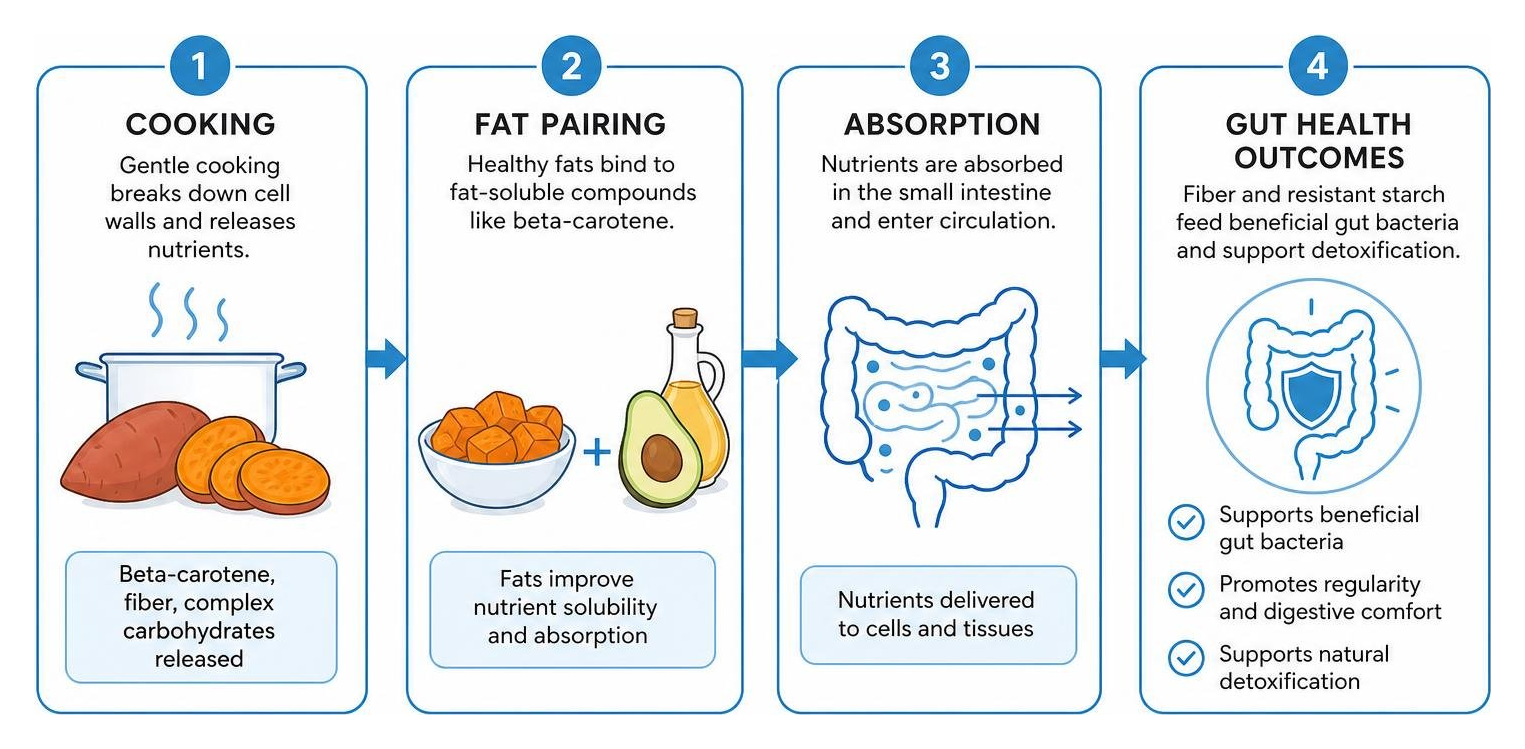
When sweet potatoes are cooked and subsequently allowed to cool, a portion of their natural starch transforms into resistant starch. This starch resists breakdown in the upper gastrointestinal tract and passes directly into the large intestine, where it functions as a prebiotic. Beneficial gut microbes ferment this resistant starch to generate short-chain fatty acids (SCFAs), particularly butyrate and acetate.
Gut bacteria can ferment resistant starch into short-chain fatty acids, including butyrate, which helps supply energy to cells lining the colon. Additionally, laboratory and preclinical research suggests that compounds in purple sweet potatoes may interact with the gut microbiome, but more human research is needed. To explore how gut health directly influences systemic inflammation, take a moment to read our guide on understanding clean eating for inflammation.
Health Benefits of Sweet Potato for Eye and Vision Protection
Protecting vision health is essential as your body changes over time. Orange sweet potatoes excel in this area due to their high concentrations of beta-carotene. After you consume sweet potatoes, your intestinal walls convert beta-carotene into active vitamin A (retinol). Vitamin A is a core structural component of rhodopsin, the light-sensitive protein in your eyes that enables vision in low-light conditions.
Furthermore, vitamin A helps maintain the structural integrity of the cornea and conjunctival membranes. Beta-carotene contributes to vitamin A intake, and vitamin A is necessary for normal low-light vision and the maintenance of the cornea and conjunctival membranes. For a broader overview of how this root vegetable protects vision and bodily tissues, consult this clinical review of sweet potato nutritional benefits.
Health Benefits of Sweet Potato for Immune System Resilience
Your immune system relies heavily on the strength of your body’s physical barriers, particularly the mucous membranes lining your gut, respiratory system, and urinary tract. Vitamin A derived from sweet potato beta-carotene plays an essential role in maintaining epithelial cell integrity and supporting the production of protective mucus.
When intestinal mucosal barriers remain firm and intact, pathogens struggle to penetrate into bloodstream tissue. Sweet potatoes also provide vitamin C, a nutrient that contributes to normal immune function and antioxidant protection.
Cognitive Function and Brain Preservation
Preserving memory, mental clarity, and focus is a top priority for active aging. Purple sweet potatoes contain anthocyanins that have shown antioxidant and neuroprotective activity in preclinical studies. Research indicates that these specialized polyphenols cross the blood-brain barrier, where they reduce neuroinflammation and suppress cellular oxidative damage in brain tissues.
In preclinical research, purple sweet potato anthocyanins protected hippocampal neurons from programmed cell death and attenuated spatial memory decline by modulating key cellular pathways like AMP-activated protein kinase (AMPK). These findings are promising, but human studies are still needed to determine whether purple sweet potatoes meaningfully affect memory or cognitive function. You can learn more about similar dietary antioxidants in our article on the cognitive health benefits of blueberries.
Metabolic Management and Glycemic Control
The glycemic response to sweet potatoes varies according to the variety, portion size, and cooking method. Boiling generally produces a lower response than baking or roasting, but sweet potatoes should not be described universally as low-glycemic. A fiber-containing meal may produce a more gradual glucose response than a meal centered on refined carbohydrates, although individual responses vary.
The high soluble fiber content in sweet potatoes slows down stomach emptying and delays carbohydrate breakdown. Fiber can slow digestion and help make a meal more satisfying, especially when sweet potatoes are paired with protein, healthy fat, and non-starchy vegetables. To understand how managing glucose impact supports long-term wellness, review our detailed guide to learn more about sugar and metabolism.
Heart Health and Cholesterol Regulation
Sweet potatoes support cardiovascular function through multiple physiological mechanisms. First, the soluble dietary fiber in sweet potatoes actively binds to bile acids within the digestive lumen. Soluble fiber is one component of a heart-supportive eating pattern and may contribute to healthy cholesterol management when consumed as part of an overall balanced diet.
Second, sweet potatoes supply rich amounts of potassium—a critical mineral that counterbalances excess dietary sodium. Potassium eases vascular tension in blood vessel walls, supporting healthy blood pressure levels already within a normal range.
Liver Function and Hepatoprotective Defense
Your liver processes toxins, metabolizes nutrients, and filters blood continuously. Small studies have examined whether concentrated purple sweet potato beverages affect liver-related biomarkers, but evidence for a general liver-protective effect remains limited. Clinical and preclinical studies demonstrate that purple sweet potato beverages and extracts significantly decrease elevated serum levels of liver enzymes, including gamma-glutamyl transferase (GGT), alanine aminotransferase (ALT), and aspartate aminotransferase (AST).
Lowering these enzyme markers signals reduced hepatic tissue stress and decreased cellular inflammation. Purple sweet potatoes contain anthocyanins and phenolic acids that have demonstrated antioxidant activity, although their clinical effects on liver health require further research.
Systemic Anti-Inflammatory and Cellular Defense
Chronic low-grade inflammation can quiet your body’s vital energy and contribute to joint stiffness and tissue wear over time. Sweet potatoes contain a comprehensive array of free radical scavengers—including carotenoids, anthocyanins, caffeoylquinic acids, and vitamin C—that work together to protect healthy cells from oxidative stress.
Anthocyanins extracted from purple sweet potatoes exhibit higher free radical scavenging activity than extracts from red cabbage, grape skin, elderberry, or purple corn, outperforming isolated vitamin C and vitamin E in specific laboratory assays. These compounds contribute to the antioxidant capacity of sweet potatoes, but laboratory antioxidant activity should not be interpreted as proof of improved joint mobility in humans.
Energy Replenishment and Satiety
For active women, post-workout recovery requires efficient replenishment of muscle glycogen stores alongside clean high-quality protein. Sweet potatoes provide carbohydrates that can help replenish energy after activity when included in a balanced meal with protein and other nutrient-dense foods.
Their fiber and carbohydrate content can help make meals satisfying and provide energy between meals. Whether enjoyed before a busy workday or after training with Joy at the studio in Winona Lake, Indiana, sweet potatoes are a fantastic nutrition choice. For more inspiration on smart whole-food choices, explore our curated ideas for clean eating snacks.
Optimizing Preparation: Cooking Methods and Glycemic Impact

How you prepare sweet potatoes fundamentally alters both their glycemic impact and nutrient bioavailability. While baking and roasting sweet potatoes causes their natural starches to convert into simpler maltose sugars—raising their glycemic index—boiling sweet potatoes keeps their glycemic index low to medium.
Furthermore, research reveals that cooking retains at least 70% of sweet potato beta-carotene content. Gentle thermal processing breaks down plant cell walls, rendering fat-soluble nutrients far more bioaccessible to your digestive tract.
To maximize these health benefits, consider these evidence-based kitchen practices:
- Pair with Healthy Fats: Always enjoy sweet potatoes alongside a small serving of healthy fat, such as cold-pressed extra virgin olive oil, avocado, or tahini. Beta-carotene is fat-soluble, and pairing it with dietary lipids increases its conversion into active vitamin A.
- Keep the Skin On: Wash and scrub sweet potato skin thoroughly before cooking. Keeping the edible skin can add fiber and plant compounds, provided the sweet potato is washed thoroughly.
- Cool After Cooking: Cooling cooked sweet potatoes can increase their resistant starch content, which may provide additional substrate for gut bacteria.
- Use Stainless Steel Cutlery: When slicing raw sweet potatoes, cut them with stainless steel knives rather than carbon steel. Carbon steel reacts with phenolic compounds in the sweet potato flesh, causing discolored darkening.
- Choose Microwaving, Steaming, or Air-Frying: Use boiling, steaming, microwaving, roasting, or air-frying according to your meal needs, recognizing that cooking methods can affect texture, nutrient retention, and glycemic response differently.
For a deeper dive into culinary mechanics and nutrient preservation, consult this comprehensive study on sweet potato processing.
Incorporating Sweet Potatoes into Your Daily Routine

Adding sweet potatoes to your weekly meal preparation is straightforward, versatile, and rewarding. Rotating among orange, purple, and white varieties can broaden the range of carotenoids, anthocyanins, phenolic compounds, and other nutrients in your meals.
Here are a few quick, practical ways to add sweet potatoes to your plate:
- Nourishing Breakfast Skillet: Dice orange sweet potatoes into small cubes and sauté them with bell peppers, spinach, onions, and extra virgin olive oil. Top with poached eggs or lean protein for a balanced blend of complex carbohydrates, clean protein, and healthy fats.
- Toasted Sweet Potato Slices: Slice sweet potatoes lengthwise into thin slices and pass them through a toaster or toaster oven until tender. Top with almond butter and ground flaxseed for a fiber-packed snack.
- Antioxidant-Rich Roasted Medley: Toss diced orange and purple sweet potatoes together with extra virgin olive oil, rosemary, sea salt, and black pepper. Roast at 375°F until golden brown for a side dish that provides both beta-carotene and anthocyanins.
At Personalized Fitness For You, I believe that clean, intentional eating works hand-in-hand with functional movement to build true whole-istic vitality across each life stage. Whether you live in Warsaw, Indiana, or reside in another state, my customized coaching programs meet you exactly where you are.
If you are interested in virtual coaching throughout the continental United States, explore virtual health coaching services to see how we can work together remotely. If you live locally, you can discover studio training in Winona Lake, Indiana and train directly with Joy at the studio in Winona Lake, Indiana in a supportive environment tailored to your personal goals.
Frequently Asked Questions About Sweet Potatoes
Can people with diabetes safely enjoy sweet potatoes?
Sweet potatoes may fit into a diabetes-conscious eating plan, but the appropriate portion and preparation method depend on the individual’s overall meal pattern, medication use, and glucose response. People managing diabetes should follow guidance from their qualified healthcare professional.
Combining sweet potatoes with lean protein sources, healthy fats, and non-starchy leafy greens helps stabilize the overall glucose response of your meal.
What is the primary distinction between sweet potatoes and yams?
Botanically, sweet potatoes and true yams belong to completely different plant families. Sweet potatoes (Ipomoea batatas) are storage roots belonging to the morning glory family, featuring thin skin and flesh ranging from bright orange to deep purple or white.
True yams are dry, starchy tubers native to Africa and Asia belonging to the Dioscoreaceae family, featuring rough, bark-like dark brown skin and white or yellowish flesh. In North American grocery stores, the word “yam” is often a marketing term used to describe soft, orange-fleshed sweet potatoes.
This newly formed structure becomes resistant to enzymatic breakdown in your small intestine. When this resistant starch arrives in your large intestine, your gut microbiome ferments it into beneficial short-chain fatty acids like butyrate, which support intestinal wall strength and nourish gut mucosa.
Conclusion
The health benefits of sweet potato are primarily connected to its fiber, beta-carotene, vitamin C, potassium, and diverse plant compounds, all of which can contribute to a balanced, nutrient-dense eating pattern. By understanding how different color varieties and cooking techniques influence nutrient availability, you can turn this versatile root vegetable into a functional superfood that nourishes your spirit, mind, and body across every season of life.
At Personalized Fitness For You, I understand that building sustainable physical strength, mental clarity, and joint ease requires a compassionate approach tailored to your unique journey as your body changes. With the right expert guidance, you can navigate life’s changes with confidence, build functional mobility, and nourish your health without shame or guesswork.
Ready for a new fitness or health coaching journey? Contact Joy for personalized health coaching and schedule your Personalized Fitness Assessment in Winona Lake, Warsaw, or virtually throughout the continental United States.