
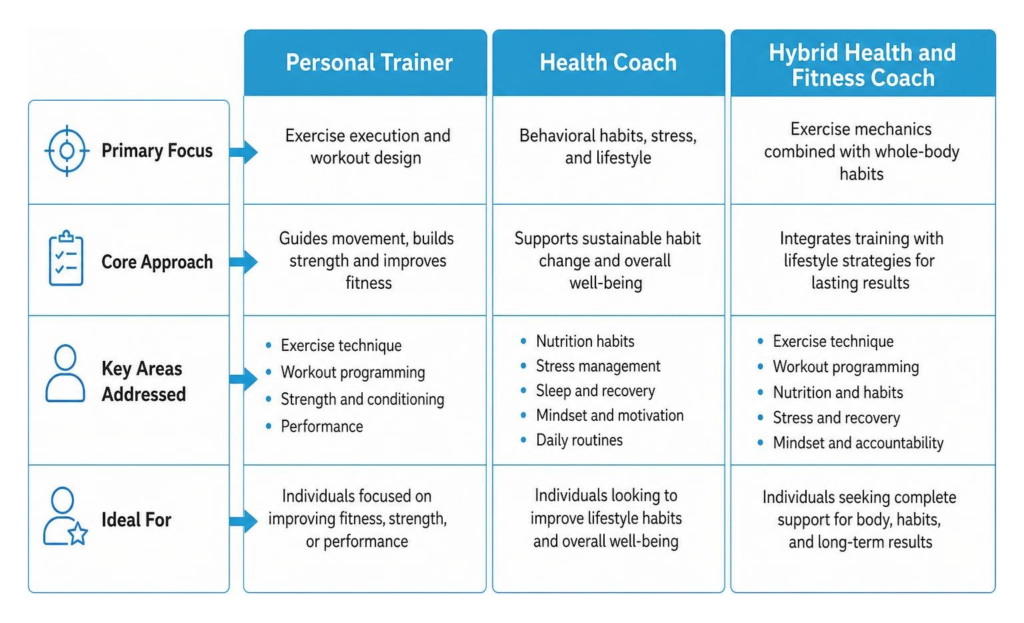
Key Differences: Personal Trainer vs. Health and Fitness Coach
Understanding the difference between a personal trainer and a health and fitness coach helps you choose the exact support your body needs during different seasons of life. Whether you live in Warsaw, Indiana, near Winona Lake, Indiana, or need remote guidance, choosing the right wellness partner makes all the difference. While many people use these titles interchangeably, their approach to your physical movement and overall lifestyle varies significantly. As a specialist dedicated to supportive physical guidance, I focus on helping you navigate each life stage with comfort, balance, and confidence.
When I meet with clients, I often hear the same concern: they want to move well, feel stronger, and protect their joints, but they do not want a one-size-fits-all plan. That is why my work as a lifestyle fitness coach considers your spirit, mind, body, daily routines, and long-term wellness goals. We look at your current energy, stress level, sleep habits, movement history, past injuries, and goals for active aging. This helps your plan feel safe, personal, and realistic instead of overwhelming.
A traditional personal fitness instructor generally focuses on movement execution during set workout sessions. They guide exercise selection, ensure proper biomechanics, and manage workout intensity inside gym environments. A specialized health and fitness coach takes a broader view, recognizing that movement is just one pillar of vitality. A dedicated fitness accountability coach bridges the gap between what you do inside a training session and how you care for yourself throughout the rest of the week.
As you compare your options, consider how a health and fitness coach can help you evaluate your baseline, build sustainable energy, and create a plan that fits your life. This whole-istic perspective is what makes a health and fitness coach different: your plan supports consistency even when life, energy levels, or joint discomfort change.
| Feature / Role | Personal Trainer | Health Coach | Hybrid Health and Fitness Coach |
|---|---|---|---|
| Primary Focus | Exercise execution and workout design | Behavioral habits, stress, and lifestyle | Exercise mechanics combined with whole-body habits |
| Scope of Work | Movement biomechanics and physical conditioning | Sleep quality, stress management, and daily habits | Functional strength, joint care, and lifestyle guidance |
| Nutritional Guidance | Basic sports nutrition concepts | Whole-food eating principles and behavior tracking | Clean eating strategies, protein intake, and glycemic care |
| Cognitive & Mental Support | Gym-floor encouragement | Mindset reflection and active listening | Brain health strategies and stress reduction techniques |
| Long-Term Objective | Short-term physical goals | Daily routine adjustments | Sustainable active aging and lifelong vitality |
What to Expect When Working With a Health and Fitness Coach
Working with a health and fitness coach is not about receiving a generic workout plan and being expected to follow it perfectly. It is a collaborative process that starts with understanding your body, your daily rhythm, your current limitations, and the outcomes you want to create over time. For many women in midlife and beyond, the goal is not extreme performance. The goal is to feel capable, mobile, steady, and confident in everyday life.
A strong coaching relationship begins with assessment. Your coach should take time to understand how you move, where you feel discomfort, how your energy changes throughout the week, and what habits may be supporting or limiting your progress. This may include looking at posture, balance, flexibility, strength, recovery patterns, sleep routines, and stress levels. From there, your plan can be adjusted to support your current season of life rather than forcing your body into a routine that does not fit.
This is where a lifestyle fitness coach provides meaningful support. Instead of focusing only on what happens during a single exercise session, lifestyle-based coaching considers how your daily habits affect your ability to stay consistent. A demanding schedule, poor sleep, joint stiffness, low motivation, or uncertainty after an injury can all influence your progress. When these factors are acknowledged, your fitness plan becomes more realistic and easier to maintain.
A health and fitness coach also helps you understand why certain movements are selected. For example, balance exercises may support confidence when walking on uneven ground. Resistance training may help preserve strength for climbing stairs, lifting groceries, or staying active with family. Mobility work may reduce stiffness and help your body feel more comfortable during daily activities. When you understand the purpose behind each part of your plan, it becomes easier to stay engaged.
Signs You May Benefit From a Health and Fitness Coach
You may benefit from working with a health and fitness coach if you have tried traditional workout programs but struggled to stay consistent. Many people stop exercising not because they lack discipline, but because the plan does not match their body, schedule, or confidence level. A more personalized approach can help remove those barriers and create a path that feels supportive rather than discouraging.
A coach may also be helpful if you are navigating joint discomfort, reduced balance, changes in strength, or uncertainty about how to exercise safely. These concerns are especially common during different stages of aging, after surgery, or after long periods away from structured movement. Instead of guessing which exercises are safe, you receive guidance that helps you progress carefully and intentionally.
A lifestyle fitness coach can also support you when your wellness goals extend beyond the gym. If you want to improve daily energy, build a steadier routine, manage stress more effectively, or feel more confident in your body, coaching can help connect those goals to practical daily actions. Small adjustments often matter most when they are repeated consistently.
Why Personalized Support Matters for Long-Term Wellness
The most effective wellness plans are not built around pressure. They are built around trust, education, and steady progress. A qualified health and fitness coach helps you understand what your body needs now while preparing you for greater strength, balance, and independence in the future. This kind of support can make fitness feel less intimidating and more empowering.
Personalized coaching also creates space for flexibility. Some weeks may require more strength training. Other weeks may need more mobility, recovery, or habit support. Your plan should be able to adjust as your body, schedule, and energy shift. That adaptability is one of the key differences between a rigid workout plan and a whole-person coaching relationship.
At Personalized Fitness For You, the goal is to help you build a sustainable rhythm that supports your spirit, mind, and body. Whether you train in the Winona Lake studio or receive virtual guidance, working with a health and fitness coach can help you move with greater confidence, care for your body more intentionally, and stay committed to your long-term wellness goals.
Essential Skills of a Top-Tier Health and Fitness Coach
A truly exceptional health and fitness coach combines exercise knowledge, lifestyle strategy, and deep human empathy. Active listening allows a coach to understand the underlying challenges behind missed workouts or low energy. Through motivational interviewing, I help you discover your personal reasons for making lasting health changes.
Rather than issuing rigid demands, a lifestyle fitness coach helps you build safe behavioral change strategies that match your routine. Evidence-based guidance supports combining structured movement, strength work, balance training, and sustainable habits to improve long-term wellness. If you want to learn more about setting sustainable targets, read our accountability coaching complete guide.
How a Health and Fitness Coach Builds Customized Programs for Active Aging
As our bodies change through different life stages, a health and fitness coach can adapt standard workout routines so they feel safer, more realistic, and more effective. Supporting joint comfort and overall stability requires structured exercise selection. We focus on low-impact resistance exercises that improve functional strength while remaining gentle on knees, hips, and shoulders.
When joint pain is present or when recovering from surgery, we implement post-rehabilitation strategies, gentle mobility work, and Pilates or general flexibility work to promote safe recovery. High-impact movements are framed as clear long-term goals that we progress toward carefully and systematically as foundational strength improves.
Nutritional alignment is equally important. We provide practical wellness guidance around balanced meals, protein awareness, and daily energy habits while encouraging you to follow medical nutrition guidance when needed. Explore how we craft a customized wellness routine or build your program with custom fitness training.
Decoding Credentials: Certifications, Board Standards, and Degrees
Navigating fitness and wellness credentials can feel overwhelming. Knowing what certifications represent ensures you are working with an authority who understands your body’s physical needs as your body changes through each season of life.
When evaluating a coach, look for established organizations like the American Council on Exercise (ACE), the National Academy of Sports Medicine (NASM), or the National Board for Health & Wellness Coaching (NBHWC). These organizations help signal professional standards, continuing education, and practical knowledge that matter when choosing a qualified coach. If you are searching for a specialized personal trainer for active aging near me, verifying these board-backed qualifications provides true peace of mind.
Certifications vs. Academic Degrees in Health and Wellness
While short-term certifications offer valuable practical tools, a foundational degree in health science, exercise physiology, or Therapeutic Recreation provides deep expertise in human anatomy, disease management, and adaptive care. As a specialist with background in Therapeutic Recreation, Functional Movement, Brain Health, and Orthopedic Care, I understand how to modify exercises for joint safety and cognitive vitality. A professional with specialized credentials understands how to adapt movements safely so an elevated heart rate is achieved without joint overexertion. This academic foundation ensures your program stays safely within the appropriate scope of practice.
Industry Standards and Quality Benchmarks
The health industry continues to emphasize preventive healthcare through standardized professional credentials. The growing emphasis on preventive wellness makes it even more important to choose a coach who uses credible standards, safe progressions, and individualized guidance.
Strong professional standards help you evaluate whether a coach uses practical health metrics, safe progressions, and evidence-informed methods rather than trend-based advice. By tracking your progress against established benchmarks and functional strength markers, we make sure every session supports your long-term independence, movement confidence, and daily vitality.
Coaching Models: In the Studio vs. Virtual Guidance
Choosing the right format for your training depends on your daily schedule, location, and preferred style of learning. Both training in the studio and remote instruction offer effective paths toward lasting strength and whole-istic vitality.

Train with Joy at the studio in Winona Lake, Indiana, for guidance on movement and personal encouragement. If you travel frequently or reside outside Kosciusko County, live virtual coaching is also available throughout the continental United States.
Remote instruction utilizes functional movement assessments to evaluate mobility, posture, and strength safely through a screen. Read our guide on virtual gains is an online personal trainer right for you to learn how virtual guidance keeps you consistent. Using evidence-informed movement principles, your health and fitness coach can structure workouts around your current mobility, posture, strength, and confidence level.
Working with Coaches in Healthcare and Corporate Wellness Settings
Health coaches play a vital role in clinical healthcare and corporate wellness programs. By partnering with medical professionals, certified health coaches help individuals put daily lifestyle habits into action seamlessly.
Working alongside primary care guidance, a coach helps monitor objective metrics like blood pressure levels and cholesterol numbers. Public-health guidance consistently supports regular movement, strength work, and healthy daily routines as part of long-term wellness. Integrating fitness coaching into your routine provides the compassionate support needed to turn medical recommendations into daily, sustainable habits.
Frequently Asked Questions About Finding a Health Coach
What key certifications should a qualified health and fitness coach hold?
Look for credentials accredited by the National Commission for Certifying Agencies (NCCA), such as ACE, NASM, or ACSM. Board credentials like the National Board Certified Health & Wellness Coach (NBC-HWC) indicate advanced training in behavioral coaching and lifestyle support.
What is the primary difference between a personal trainer and a health coach?
A personal trainer primarily designs and supervises your exercise sessions inside the gym. A health coach supports your whole lifestyle, addressing clean eating, stress management, sleep quality, and the behavioral changes needed to sustain an active lifestyle.
How do health coaches tailor programs as your body changes through different life stages?
A qualified coach adjusts exercise selection to protect joint integrity, promote physical balance, and accommodate joint discomfort or past surgeries. Programs focus on functional strength and active aging, helping you navigate physical changes without pain or overexertion.
Conclusion: Partnering for Sustainable Vitality
Prioritizing your physical well-being is one of the most meaningful decisions you can make as your body changes across each life stage. Working with a qualified health and fitness coach provides the expert structure, accountability, and compassionate guidance needed to build sustainable strength, balance, and daily energy. By taking a whole-istic approach that addresses your spirit, mind, and body, you can confidently navigate changes in your routine, manage joint discomfort, and maintain independence for years to come without fear or pressure.
At Personalized Fitness For You, we support you through life’s changing seasons with customized care. You can train with Joy at the studio in Winona Lake, Indiana, or access virtual coaching available throughout the continental United States.
Ready to work with a health and fitness coach who understands your body, goals, and lifestyle? Contact Personalized Fitness For You today to book your Personalized Fitness Assessment and begin building a sustainable wellness plan in Winona Lake, Indiana, or through virtual coaching.