

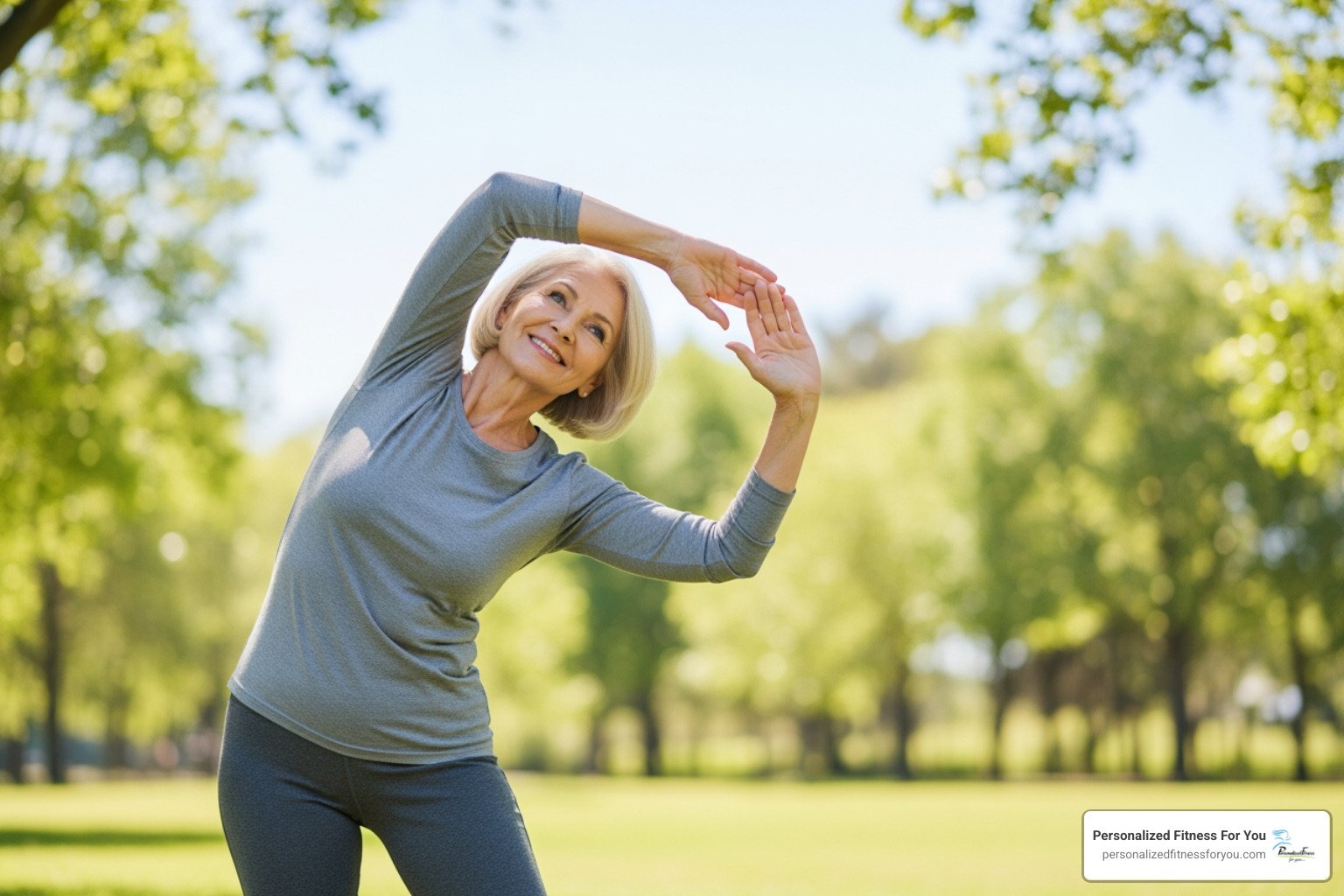
Workout routine for elderly: 4 Pillars to Vibrant Life
Why a Fitness Program for Active Aging is Your Foundation for Vitality
A fitness program for active aging is essential for maintaining independence, preventing chronic illness, and preserving the joy of movement. A balanced routine combines four key components: endurance for heart health, strength training for muscle and bone density, balance exercises to prevent falls, and flexibility to keep you moving freely. Aim for at least 150 minutes of moderate-intensity activity weekly, plus strength and balance work on two or more days.
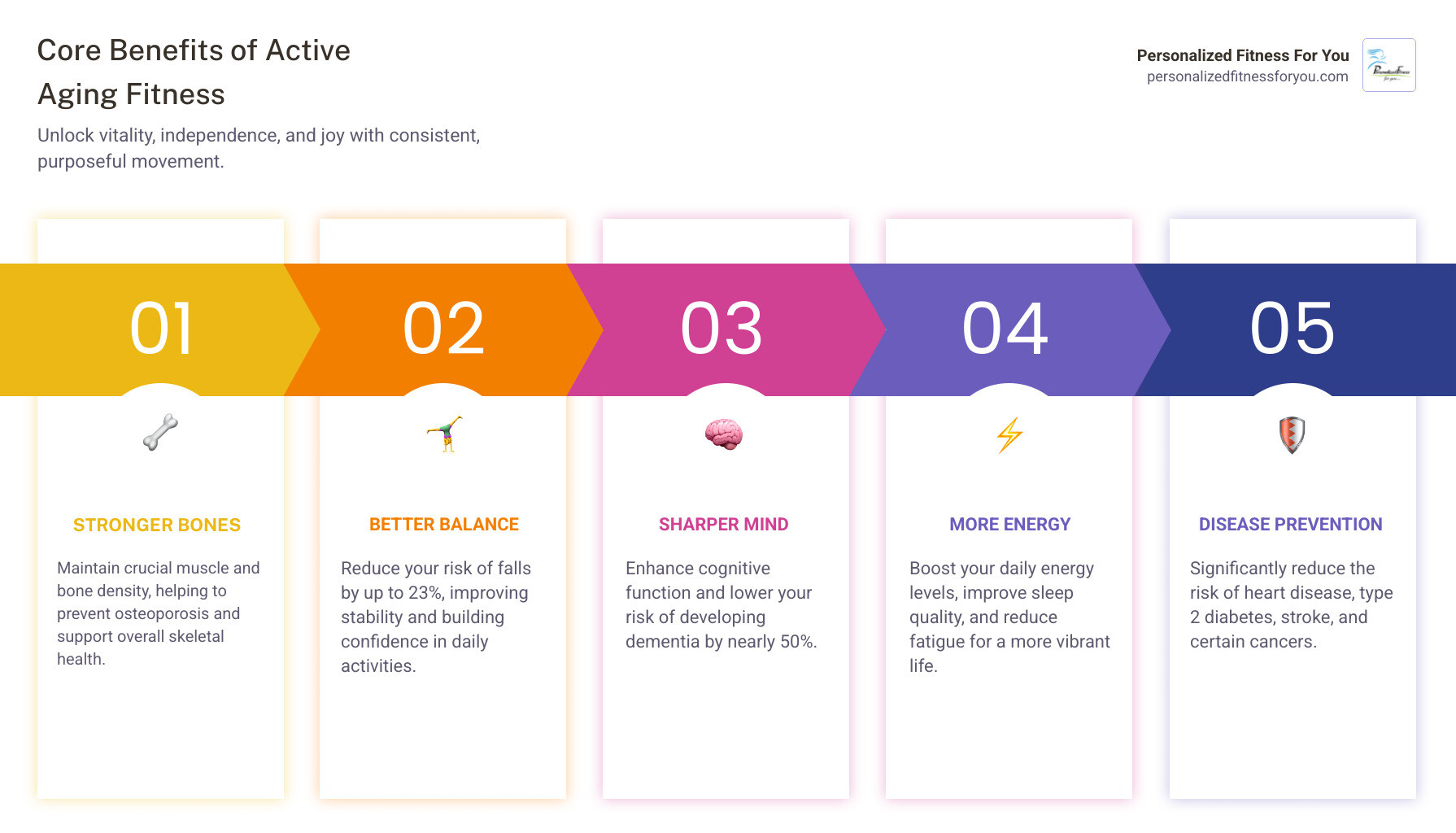
Regular physical activity is a powerful tool to protect your health as your body changes. Consistent movement significantly reduces your risk of heart disease, type 2 diabetes, stroke, and certain cancers, and can lower dementia risk. It also improves sleep, reduces depression, and boosts energy. Staying active means you can continue doing what you love, from gardening to traveling, with confidence and ease. Exercise also improves cognitive function and supports emotional well-being. For women, a well-designed program addresses unique challenges like maintaining bone density and joint health.
As Joy Grout, owner of Personalized Fitness For You, I’ve seen how personalized fitness programming improves the overall fitness for women in the Winona Lake and Warsaw area. My approach focuses on creating individualized plans that honor your spirit, mind, and body, ensuring every movement supports your long-term wellness.
Why Daily Movement is Your Key to a Vibrant Life
The benefits of regular physical activity extend far beyond muscle tone, forming the foundation of whole-istic health. Consistent movement is a powerful tool for preventing chronic conditions, maintaining cognitive sharpness, and preserving your independence. For women in the Winona Lake and Warsaw area, finding a routine that fits your life is the first step toward a healthier future.
Even a single session of moderate activity can improve sleep and lower blood pressure. Over time, regular exercise significantly reduces your risk of heart disease, stroke, type 2 diabetes, and certain cancers. The impact on brain health is especially compelling, as physical activity can reduce the risk of developing dementia by nearly 50%. This connection between movement and cognitive vitality is central to our programs.
Ready to find a fitness plan that works with your unique needs? Book your complimentary Personalized Fitness Assessment today.
Fall prevention is another critical benefit of a consistent fitness program for active aging. Regular exercise, particularly activities improving balance and strength, reduces the likelihood of falling by 23%. This stability builds confidence in your movements, whether you’re navigating stairs or walking on uneven surfaces, which is invaluable for maintaining independence and supports your emotional wellbeing.
Daily movement also invigorates your entire being. While it seems counterintuitive, being active energizes you by promoting the release of endorphins. This natural boost combats stress, promotes healthy sleep, and gives you more energy for the activities you love. Every step you take is an investment in your future vitality, helping you live a longer, healthier, and more joyous life.
The 4 Pillars of a Balanced Fitness Program for Active Aging
A truly effective fitness program for active aging is balanced, addressing four crucial pillars of physical health to ensure you move with confidence. Understanding each component helps you build a routine that supports your body from every angle, which is something we specialize in for our clients in the Winona Lake area. Think of it like a four-legged chair—each leg must be strong for the whole structure to support you.
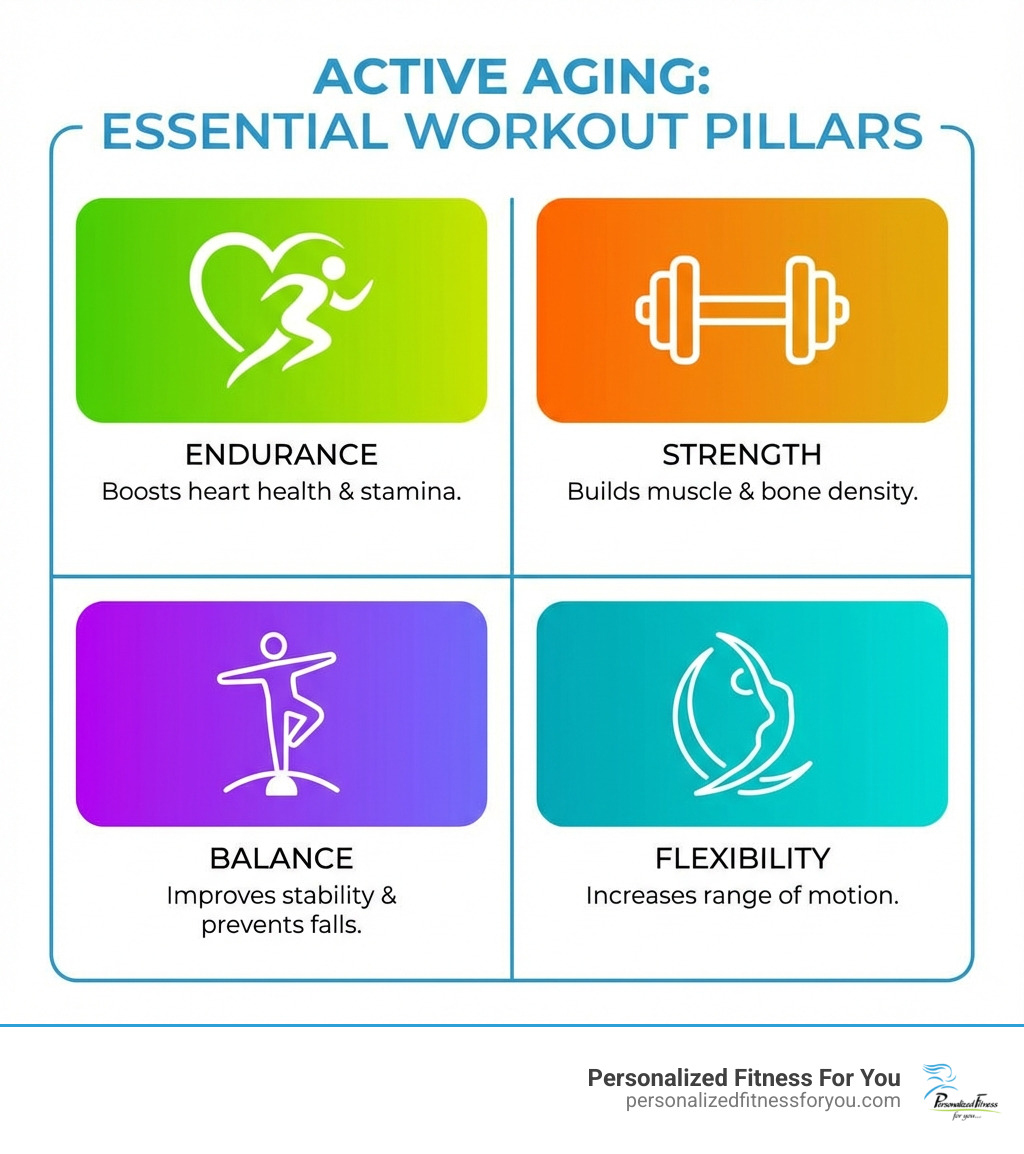
Endurance activities, or aerobic exercise, are the foundation of cardiovascular health. Activities like brisk walking, cycling, or water aerobics get your heart pumping and boost stamina. The American Heart Association recommends at least 150 minutes of moderate-intensity aerobic activity weekly.
Strength training becomes increasingly important as your body changes, as it counteracts the natural loss of muscle and bone mass. This work preserves your independence and energy. It’s also one of the best ways to keep your bones dense, which is why we emphasize it in our strength training programs.
Balance exercises are your insurance policy against falls. Inactivity and other physical changes can diminish balance, but targeted work improves coordination and stability. This gives you the confidence to move freely without fear of falling.
Flexibility work completes your fitness program by relieving joint stiffness and increasing your range of motion. This makes daily tasks like dressing, reaching, or bending far more comfortable and directly impacts your quality of life.
To maintain good health, active aging women should aim for some physical activity every day, including at least 150 minutes of moderate-intensity aerobic activity per week. Don’t let this number overwhelm you, as we all start somewhere. It’s also crucial to incorporate activities that improve strength, balance, and flexibility on at least two days a week. We offer specialized in-person training designed to integrate all these essential components for comprehensive well-being.
Designing Your Weekly Fitness Program for Active Aging Women
Creating a sustainable weekly schedule is about consistency, not complexity. Aim for at least 150 minutes of moderate-intensity activity spread throughout the week, plus strength, balance, and flexibility work on at least two days. A well-designed fitness program for active aging women fits into your life, focusing on regular, joyful movement that builds strength and stability.
Sample Weekly Schedule
Here’s a sample balanced week. This is just a starting point—find a rhythm that feels sustainable and energizing for you. This is just a sample and not meant for everyone. Finding a personalized plan that suits you best is the most important.
| Day | Activity | Focus |
|---|---|---|
| Monday | Brisk Walk (30 min) + Strength Training | Endurance, Strength |
| Tuesday | Active Recovery (Gentle Flexibility Work) | Flexibility, Mobility |
| Wednesday | Water Aerobics or Cycling (30 min) | Endurance, Low-Impact |
| Thursday | Strength Training + Balance Exercises | Strength, Balance |
| Friday | Brisk Walk (30 min) | Endurance |
| Saturday | Pilates or Gentle Flexibility Work (30 min) | Flexibility, Core Strength |
| Sunday | Rest or Light Walk (focus on active recovery and enjoying the outdoors) | Recovery, Light Movement |
How to Adapt Your Fitness Program for Active Aging Women
Adapting exercises to your individual needs is crucial for a safe and effective program. Always listen to your body—exercise should empower you, not cause pain.
If you’re new to exercise, start slow. Begin with shorter durations and lower intensities, then gradually increase as your strength improves. For example, start with 10-minute walks and add a few minutes each week. Modifying exercises is also key. Many movements can be performed with a chair or wall for support, like wall push-ups or chair squats, making them accessible for any starting point.
If you have specific health conditions like arthritis or osteoporosis, consulting with a certified specialist is paramount. A specialist can help you navigate your unique needs, ensuring your program is designed to protect your joints and support your recovery. Our team excels in creating customized wellness plans that account for your specific health profile, ensuring your journey is both effective and enjoyable for women in the Winona Lake and Warsaw area.
Safe and Effective Exercises for a Stronger You
This section provides foundational exercises to build strength, stability, and range of motion. Always warm up for 5-10 minutes with light movement, like marching in place, to prepare your body and reduce injury risk.
Essential Strength Training Exercises
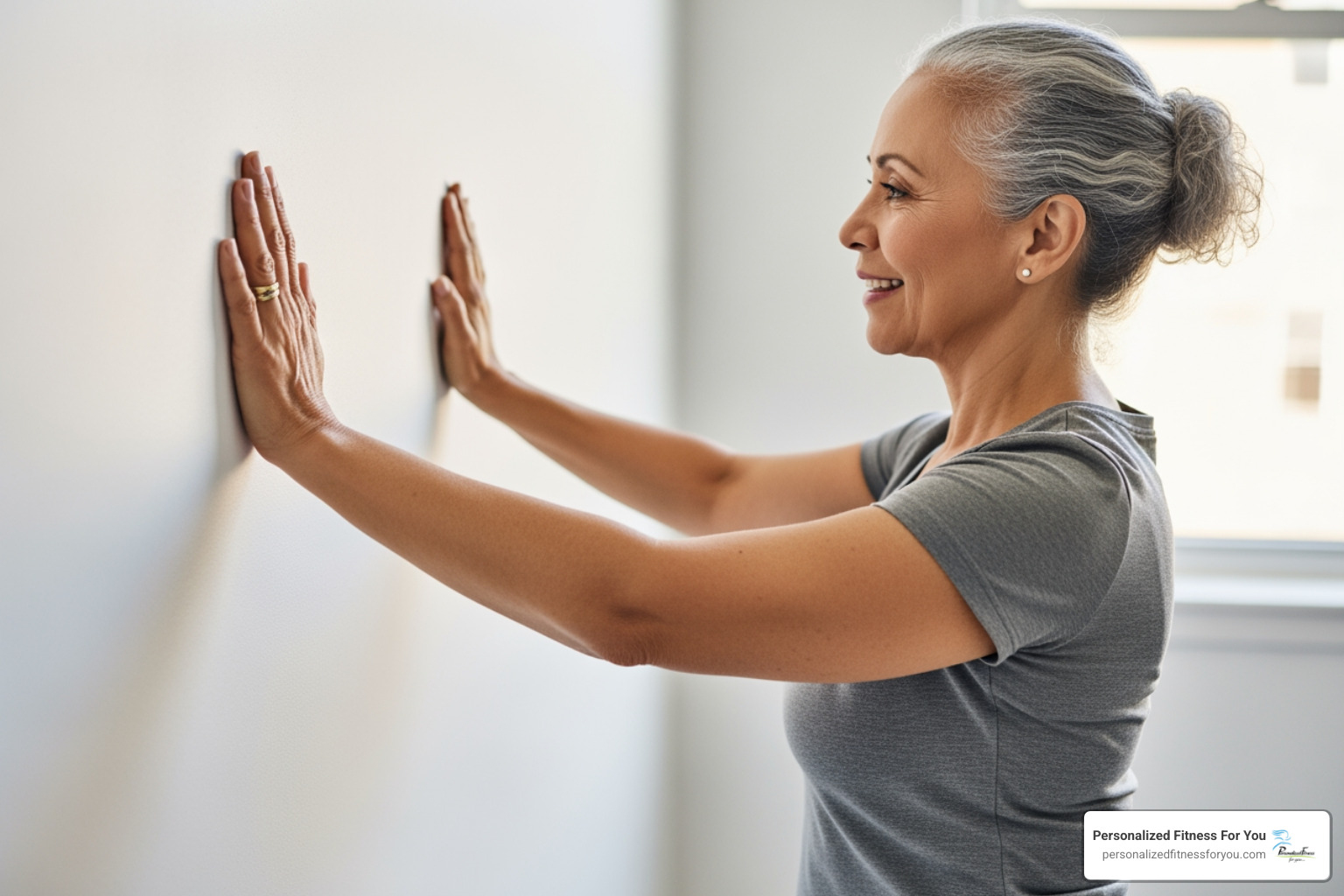
Strength training is crucial for maintaining muscle mass and bone density, which helps you retain independence. It’s one of the most effective ways to keep bones healthy, as we emphasize in our strength training programs.
- Chair Squats: Stand before a sturdy chair, feet shoulder-width apart. Lower yourself as if to sit, keeping weight in your heels, then push up to stand. The chair provides safety and support. Aim for 10-15 reps.
- Wall Push-ups: Stand arm’s length from a wall, hands flat at shoulder height. Bend your elbows to lean in, keeping your body straight, then push back. This builds upper body strength safely. Aim for 10-15 reps.
- Bicep Curls: With light weights or a resistance band, keep elbows at your sides and curl hands toward your shoulders, then slowly lower. This strengthens arms for daily tasks. Aim for 10-15 reps.
- Glute Bridges: Lie on your back, knees bent, feet flat. Lift your hips until your body is in a straight line from shoulders to knees, squeezing your glutes. This strengthens your glutes and lower back. Aim for 10-15 reps.
Key Balance Exercises for Fall Prevention
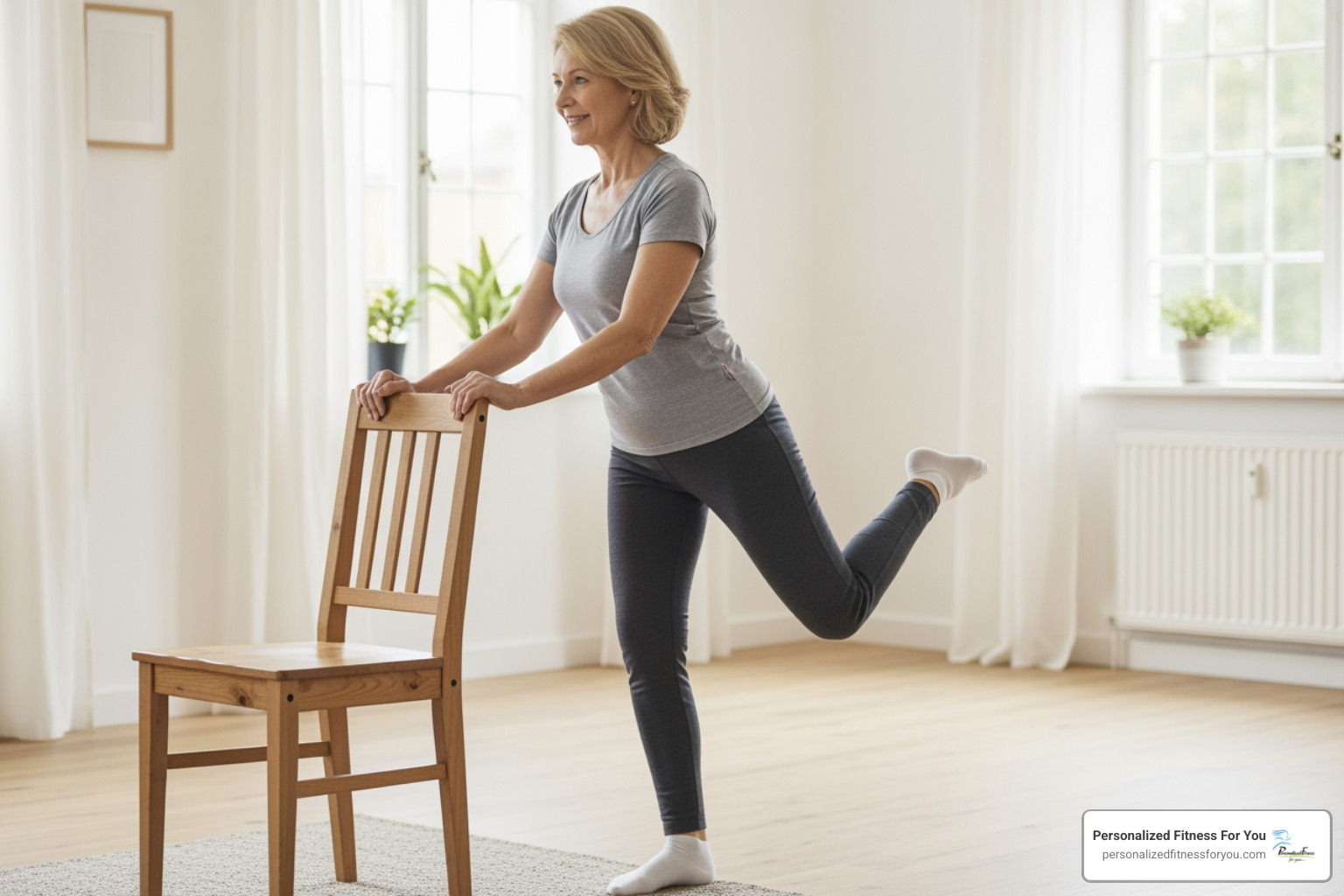
Improved balance reduces your fall risk and builds confidence in everyday movements.
- Single-Leg Stance: Holding a sturdy chair for support, lift one foot and hold for 10-30 seconds. Repeat on the other side. Gradually reduce your reliance on the support as you improve.
- Heel-to-Toe Walk: Walk in a straight line, placing the heel of one foot directly before the toes of the other. Take 10-20 steps, using a wall for support if needed.
- Side Leg Raises: Standing next to a chair for support, slowly lift one leg out to the side, then lower with control. This strengthens hip muscles for stability. Aim for 10-15 reps per leg.
Gentle Flexibility and Mobility Work
Flexibility work reduces stiffness and makes daily movements easier and more comfortable.
- Neck Stretch: Gently tilt your head, bringing your ear toward your shoulder. Hold for 15-30 seconds, then repeat on the other side to release neck tension.
- Shoulder Rolls: Slowly roll your shoulders forward for 5-10 reps, then backward. This loosens tension in the upper back and shoulders.
- Seated Hamstring Stretch: Sit on a chair’s edge with one leg extended, heel on the floor. Lean forward from your hips until you feel a stretch. Hold for 15-30 seconds, then switch legs.
Exercises to Approach with Caution
Certain activities like squats with heavy weights, long-distance running, or High-Intensity Interval Training (HIIT) require careful progression under expert guidance. The high impact or technical complexity can increase injury risk without a proper foundation. “Caution” doesn’t mean “never.” These can become valuable parts of your routine once you’ve built the necessary strength and mobility. Working with a certified specialist makes all the difference. Our safe, expert-led Virtual Training programs are designed to help you build this foundation and progress toward your goals with confidence.
Staying Motivated on Your Fitness Journey
Consistency is the most important part of any fitness program for active aging women. It’s about showing up for yourself in ways that feel sustainable and joyful. Finding your “why” and building a support system are key to long-term success. Life presents challenges, but with the right strategies, you can navigate them and maintain your momentum.
- Find activities you enjoy. Exercise shouldn’t be a chore. If you love the outdoors, explore local trails. If you prefer a group setting, try a water aerobics or Pilates class.
- Set realistic goals. Start small, like a 15-minute walk three times a week. Meeting small goals builds confidence and momentum for larger ones.
- Track your progress. Note how you feel. Do you have more energy? Are you sleeping better? These real-life improvements are the true markers of success.
- Find a support system. An exercise partner or a supportive community provides accountability and makes movement more enjoyable. This is why we’ve built a strong “exercise family” in the Winona Lake area.
- Seek professional guidance. A health coach provides personalized support and helps you stay on track. This partnership can transform your journey.
- Celebrate small wins. Acknowledging your efforts, no matter how small, reinforces positive behavior and reminds you that progress is happening.
- Overcome barriers. Have a plan for off days. If you’re tired, do 10 minutes of gentle stretching. Something is always better than nothing, and being active ultimately gives you more energy.
Your fitness journey is personal. With the right strategies and support, you can build a sustainable routine that brings you joy and vitality for years to come.
Frequently Asked Questions about Fitness for Active Aging
How much physical activity do I really need each week?
For substantial health benefits, aim for at least 150 minutes of moderate-intensity aerobic activity (like brisk walking) or 75 minutes of vigorous activity each week, spread throughout the week. Additionally, incorporate muscle-strengthening activities on 2 or more days a week, working all major muscle groups. Adding balance and flexibility exercises on most days completes a comprehensive fitness program for active aging women that supports your independence and vitality.
What are the best low-impact exercises?
Low-impact exercises protect your joints while providing an effective workout. Swimming and water aerobics are excellent choices, as water reduces stress on joints while providing resistance. Cycling on a stationary bike gets your heart rate up without jarring impact. Pilates is also valuable for improving core strength, flexibility, and balance. These activities allow you to build fitness safely, making them ideal whether you’re just starting or managing joint concerns.
How can I start exercising if I have a chronic condition like arthritis or osteoporosis?
Starting a fitness program with a chronic condition requires a personalized approach, but it is highly beneficial. For arthritis, low-impact movement can reduce pain and improve joint function. For osteoporosis, weight-bearing and strength exercises are crucial for stimulating bone growth by signaling your body to build stronger bones.
However, the specific exercises and intensity must be carefully adapted. This is why consulting with a certified specialist who understands your condition is the safest and most effective way to start. A specialist can help you navigate your unique needs and design a program that is both beneficial and protective. Your condition doesn’t have to limit you; your path to fitness simply needs to be thoughtfully customized. Seek counsel from your healthcare provider and find a trainer who has the expertise in the area you need!
Begin Your Journey to a Healthier, More Vibrant You
Embracing a consistent fitness program for active aging is a profound act of self-care that builds a foundation for a long, healthy, and independent life. By integrating endurance, strength, balance, and flexibility, you invest in your whole-istic well-being—honoring your spirit, mind, and body.
The journey to vibrant health begins with deciding you deserve to move with confidence and live without limitations. The right fitness program can transform how you experience your body as it changes, helping you prevent falls, build stronger bones, and feel more energized.
At Personalized Fitness For You, we understand that your health history, goals, and lifestyle are unique. Joy Grout is dedicated to creating a plan that is safe, effective, and joyful for you. With over 20 years of experience, Joy specializes in working with active aging women in the Winona Lake and Warsaw area, as well as virtually. She meets you where you are, whether you’re post op and have been discharged from your Physical therapy program or ready to train for a triathlon. Every program is custom-designed to honor your current abilities while progressively building toward your goals.
Your path to a healthier, more vibrant you starts with a conversation. Schedule your complimentary consultation with Joy today by visiting our contact page. During this no-pressure assessment, you can share your goals and find how a personalized fitness program for active aging can fit seamlessly into your life. You deserve to live with strength, confidence, and joy—and we’re here to help you make that a reality.


