


When it comes to nutrition, understanding carbohydrates can sometimes feel like navigating a complex maze. But what if there was a simple tool to help you choose the right carbs for sustained energy, better weight management, and stable blood sugar? Enter the glycemic index.
Every time you eat or drink, your body breaks down the food you consume. For foods containing carbohydrates – and most foods do, to varying degrees – this breakdown process transforms them into glucose, a type of sugar that enters your bloodstream. This glucose is what your body uses as its primary fuel source, powering everything from your daily activities to your brain function. This is what you probably know as your “blood glucose” or “blood sugar.”
The glycemic index (GI) is a numerical scale, from 0 to 100, that ranks carbohydrate-containing foods based on how quickly and how much they raise your blood sugar levels after eating. It’s a way to understand the quality of the carbohydrates you’re consuming. Foods with a high glycemic index are those whose carbohydrates are rapidly digested and absorbed, leading to a quick and significant spike in blood glucose.
On the other hand, low glycemic index foods contain carbohydrates that are digested more slowly, resulting in a gradual and more sustained rise in blood sugar. Think of it as a roadmap for your body’s glucose response to the carbs you eat!
Carbohydrates, Blood Sugar, and Insulin
To truly appreciate the glycemic index, it’s vital to grasp the interplay between carbohydrates, blood sugar, and insulin. When your blood sugar rises after eating carbohydrates, your pancreas releases insulin. Insulin’s job is crucial: it acts like a key, unlocking your cells so they can absorb glucose from your bloodstream for energy or storage.
However, the speed and magnitude of that blood sugar rise matter significantly. When you consume high glycemic index foods, the rapid influx of glucose triggers a large and sudden release of insulin. While this immediate response is necessary, consistently high spikes can lead to what’s known as insulin resistance over time. This means your cells become less responsive to insulin, requiring your pancreas to work even harder to produce more. This chronic strain can contribute to several health concerns, including:
- Weight Management Challenges: Frequent blood sugar spikes and subsequent insulin surges can promote fat storage and make it more difficult to achieve or maintain a healthy weight.
- Energy Swings and Fatigue: The quick rise and then sharp drop in blood sugar after a high-GI carb can leave you feeling drained, sluggish, and craving more carbohydrates to regain that energy.
- Increased Risk of Type 2 Diabetes: For individuals predisposed to diabetes, regularly consuming high-GI carbs can exacerbate issues with blood glucose regulation, potentially accelerating the onset or worsening the management of type 2 diabetes.
- Heart Health Concerns: Emerging research, including studies highlighted by Harvard Health Publishing, suggests that diets rich in high-GI carbohydrates may be linked to an increased risk of heart disease.
By consciously choosing low glycemic index options, you are actively supporting a more stable blood glucose response. This translates to steadier energy throughout your day, greater satiety after meals, and a reduced risk of developing or worsening chronic health conditions, especially those related to blood sugar regulation. It’s about optimizing how your body processes and utilizes the carbohydrates you consume.
Decoding the Glycemic Index Scale
To truly harness the power of the glycemic index, it helps to know how carbohydrate-containing foods are categorized:
- Low GI Foods (55 or less): These are your champions for sustained energy and stable blood sugar. Their carbohydrates are slowly digested. Examples include most non-starchy vegetables (like broccoli, spinach, and bell peppers), legumes (such as lentils and chickpeas), most fruits (apples, berries, oranges), and many whole grains (like steel-cut oats and quinoa).
- Medium GI Foods (56-69): These foods have a moderate effect on blood sugar. Their carbohydrates are digested at a moderate pace. Think brown rice, whole wheat bread, and sweet potatoes. They can be part of a balanced diet when consumed in moderation.
- High GI Foods (70 or more): These foods cause a rapid rise in blood sugar because their carbohydrates are quickly broken down. White bread, white rice, sugary cereals, and many processed snacks fall into this category.
It’s important to remember that the glycemic index is a guide, not a rigid rule. Several factors can effect a food’s GI value and how its carbohydrates affect your blood sugar, including how it’s prepared, its ripeness, and what other foods it’s eaten with.
Know Your Carbs
To help you make informed choices, here’s a glance at the glycemic index of some common foods. Remember, these are average values and can vary slightly based on preparation.
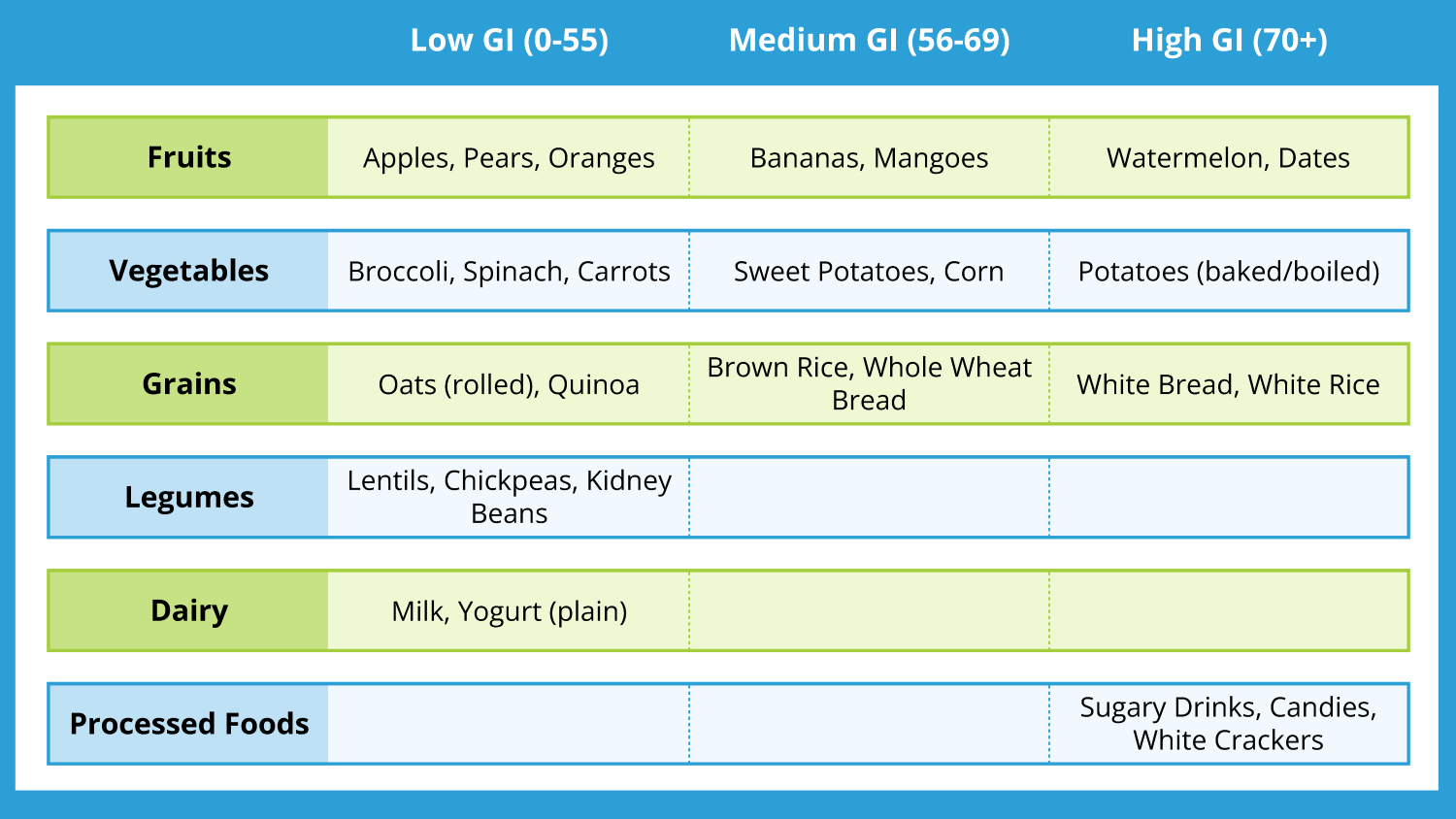
Note: This table provides general guidance. For a comprehensive list of glycemic index values, see this Glycemic Index Chart by glycemic-indexguide.net.
Crafting Your Plate with the Glycemic Index in Mind
Now that you have a grasp on what the glycemic index means and its relationship to carbohydrates, let’s talk about practical application. Incorporating GI principles into your daily eating doesn’t have to be restrictive or mean entirely avoiding certain foods. Instead, it’s about making smart swaps and, more importantly, strategically combining carbohydrates to manage your blood sugar more effectively.
The key lies in understanding that the GI of an entire meal can be influenced by all its components. You don’t have to eliminate all high-GI foods; instead, focus on balancing them with low GI foods and other macronutrients. This strategy helps to lower the overall glycemic load of your meal, resulting in a more gradual and sustained blood sugar response.
Here’s how to harness the power of food combinations:
Pair High-Glycemic Index Carbs with Protein and Healthy Fats
This is perhaps the most impactful strategy. Adding protein (like lean meats, fish, eggs, nuts, or seeds) and healthy fats (like avocado, olive oil, or nuts) to your meals slows down digestion and absorption, mitigating the blood sugar spike from even moderate- or high-GI carbohydrates.
Example: Instead of just having a baked potato (a high-GI carb), top it with some Greek yogurt or cottage cheese for protein, and a sprinkle of chives or healthy oil. This combination significantly lowers the overall glycemic impact compared to eating the potato plain.
Benefit: By slowing down the absorption of carbohydrates, you avoid drastic blood sugar peaks, leading to more stable energy levels and reduced insulin demand.
Embrace Fiber-Rich Carbohydrates
Fiber, particularly soluble fiber (found in oats, legumes, and most fruits and vegetables), plays a critical role in slowing down the digestion and absorption of carbohydrates, thus significantly lowering the glycemic response of a meal.
Example: If you enjoy white rice (a high-GI carb), try cooking it with a generous amount of lentils or black beans (both low GI and fiber-rich). This not only adds flavor and nutrients but also reduces the meal’s overall GI.
Benefit: Fiber creates a physical barrier that slows glucose entry into the bloodstream, leading to a smoother blood sugar curve.
Choose Whole, Less Processed Forms of Carbs
While not strictly a combination, this is a foundational principle. Whole grains, fruits with their skins, and legumes naturally contain fiber and other nutrients that slow down their digestion compared to their refined counterparts.
Example: Opt for whole-grain bread over white bread, or eat an apple instead of drinking apple juice. The carbohydrates in the whole versions are processed more slowly.
Benefit: You inherently start with carbohydrates that have a gentler impact on blood sugar.
Cook Smart
The way you prepare carbohydrate-rich foods can affect their glycemic index. Overcooking starches like pasta and rice can increase their GI by making their carbohydrates more readily available for digestion.
Example: Aim for al dente pasta. Also, cooling cooked starches like potatoes or rice can slightly lower their GI due to the formation of “resistant starch.” Reheating them won’t necessarily reverse this.
Benefit: This offers a simple way to subtly reduce the glycemic impact of common carbohydrates.
At Personalized Fitness For You, we understand that every body is unique. What works for one person might need a slight adjustment for another. That’s why we emphasize a personalized approach to your fitness and nutrition journey. We encourage you to experiment with different low GI foods and observe how your body responds, paying attention to your energy levels and how satisfied you feel. By thoughtfully combining your carbohydrates with other food components, you empower yourself to enjoy a wider variety of foods while still maintaining excellent blood sugar control and supporting your overall health goals.
A Whole-istic Approach to Carbohydrates
While the glycemic index is an incredibly valuable tool for understanding how different carbohydrates impact your blood sugar, it’s just one piece of the puzzle when it comes to healthy eating. It’s crucial to also consider the overall nutritional value of a food, its fiber content, and its impact on satiety. A food might have a low GI but still be high in unhealthy fats or added sugars (which are, after all, a type of carbohydrate).
Conversely, some high-GI carbohydrates, like potatoes, offer valuable nutrients and can be part of a balanced diet when consumed in moderation and paired thoughtfully with other foods that balance their glycemic effect. The message isn’t that certain carbohydrates are “bad,” but rather how they fit into the bigger picture of your meal and overall diet.
Our philosophy at Personalized Fitness For You is about creating sustainable habits that empower you to live your best life. By understanding the glycemic index and how it relates to the carbohydrates you consume, you gain a powerful ally in managing your blood sugar levels, optimizing your energy, and achieving your health and fitness goals. It’s about making informed choices that fuel your body efficiently and consistently, supporting your journey towards a healthier, more vibrant you.
Ready to take the next step in understanding your nutrition and optimizing your health? Contact Joy today to explore how personalized guidance can help you unlock your full potential!