

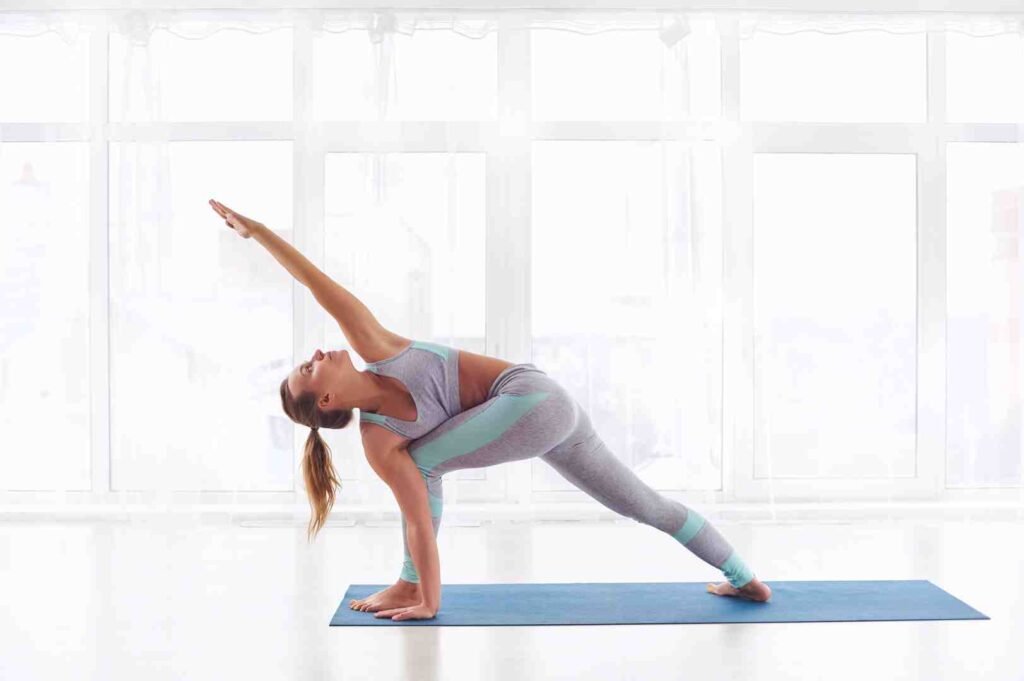
Understanding Your Core: Anatomy, Posture, and Daily Health
When many women consider a basic core workout, they often picture traditional crunches that focus only on the outer abdominal surface. However, lasting core strength starts deeper, with the muscles that stabilize your spine, hips, and pelvis. Your core acts as a natural stabilizer, supporting your spine, hips, and pelvis while protecting your joints during everyday activities. Whether you are lifting a laundry basket, tending your garden, or taking a walk or run on the greenway as we enjoy here in Winona Lake, Indiana, a stable core helps reduce joint strain and support healthy alignment.
As your body changes through different seasons of life, beginner fitness should prioritize stability, control, and confidence over high-impact exertion. If you are balancing a full schedule or managing joint discomfort, taking a thoughtful, personalized approach ensures you stay vibrant without risking injury. To learn how customized movement can support your active fitness journey, book a Personalized Fitness Assessment with me today.
Clinical rehabilitation guidance supports foundational core strengthening as a safe way to build spinal stability without always relying on heavy external weights. Learn moreabout core health.
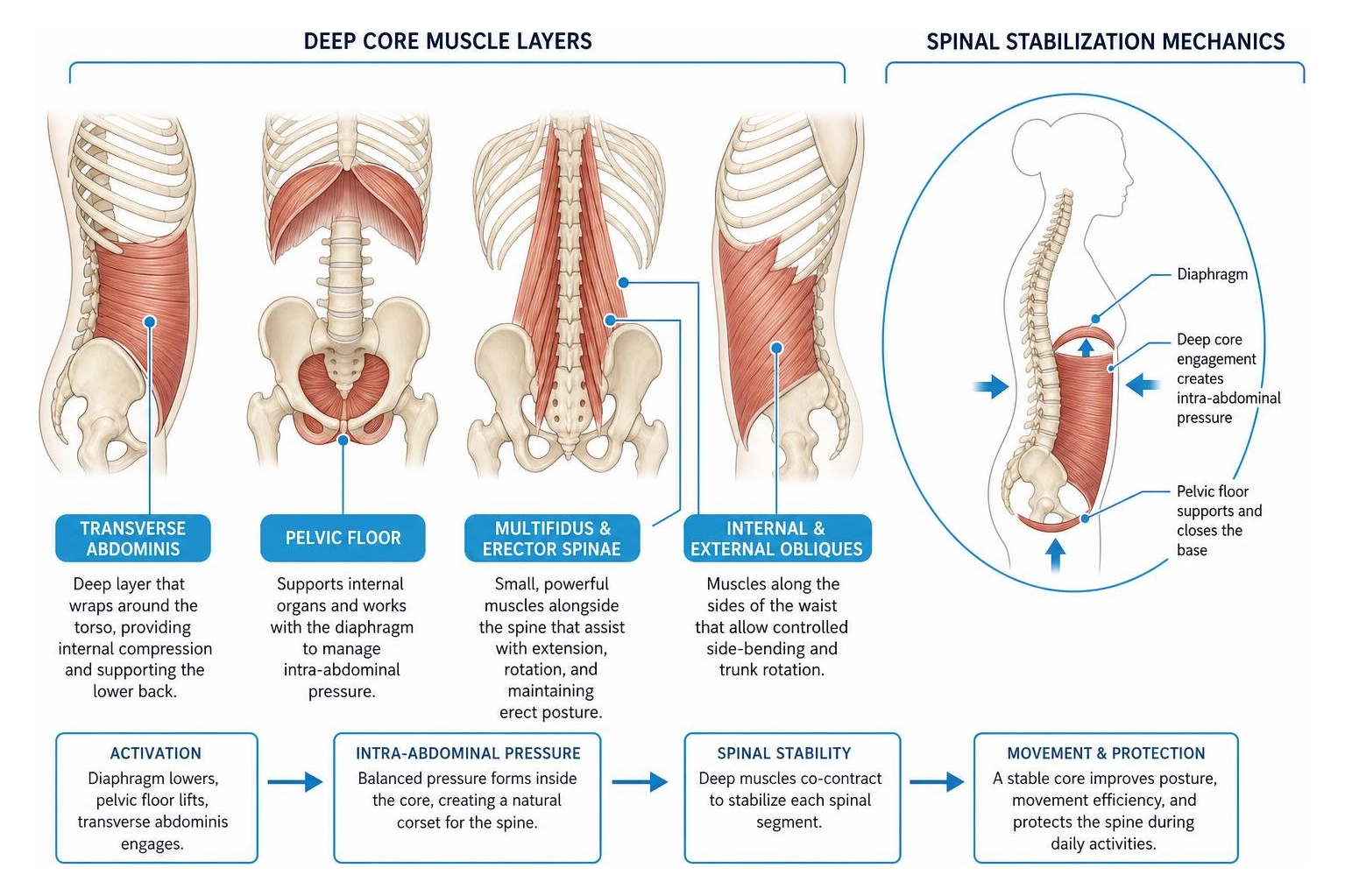
Deep Core Anatomy and Spinal Stability
To understand how a basic core workout supports posture and daily movement, it helps to look at the primary muscle groups beneath the surface:
- Transverse Abdominis: This deep muscle layer wraps around your torso like a natural corset, offering internal compression and protecting your lower back.
- Pelvic Floor: These essential muscles support your internal organs and collaborate directly with your diaphragm to manage intra-abdominal pressure.
- Multifidus and Erector Spinae: Small, powerful muscles running along your spine that assist with extension, rotation, and erect posture.
- Internal and External Obliques: Muscles positioned along the sides of your waist that allow controlled side-bending and trunk rotation.
When these muscle groups work together, they help absorb impact, stabilize your spine, and make daily tasks feel more controlled. If you are starting from scratch, reviewing our guide to beginner ab moves provides an excellent foundation for understanding deep muscular activation.
Essential Equipment-Free Movements for a Basic Core Workout

You do not need gym equipment or complex machines to begin a basic core workout that builds functional strength. Bodyweight movements are ideal for beginner fitness because they help you build stability while practicing proper form, diaphragmatic breathing, and a neutral spine. Maintaining a neutral spine ensures that your back stays in its natural curve without excessive arching or flattening, keeping joint pressure away from your lower back.
When performing floor movements, keep your neck relaxed and avoid pulling on your head. Pacing your breath by exhaling through your mouth during effort and inhaling through your nose allows your deep abdominal walls to brace correctly. Explore our simple home workout routines to see how floor exercises seamlessly fit into your daily schedule.
Mastering Static Holds in Your Basic Core Workout
Static holds, or isometric exercises, are an important part of a basic core workout because they train stability without repeated joint movement. These holds build muscular endurance and teach your deep stabilizers to keep your torso steady.
- Forearm Plank: Place your forearms flat on the floor with your elbows positioned directly beneath your shoulders. Extend your legs behind you or drop your knees to the mat for a supported variation. Keep a straight line from your head to your knees or heels, pull your navel gently toward your spine, and breathe steadily. Listen to your body and allow your knees t touch the floor or lift them off the floor.
- Dead Bug Hold: Lie flat on your back with your arms reaching straight toward the ceiling and your knees bent at ninety degrees over your hips. Gently press your lower back toward the floor by tilting your pelvis upward. Hold this neutral position while taking slow, deep breaths.
Dynamic Movements for Your Basic Core Workout
Dynamic core movements incorporate controlled motion, helping beginners build functional strength through a safe, steady range of motion. Expert physical therapy guidelines from the Cleveland Clinic core exercise guide emphasize that combining controlled movement with core engagement offers comprehensive movement health.
- Bird Dog: Begin on hands and knees with hands under shoulders and knees under hips. Slowly extend your right arm forward and your left leg backward until both are parallel to the floor. Hold for two seconds, return to the starting position, and alternate sides while keeping your hips level.
- Glute Bridge: Lie on your back with knees bent and feet flat on the floor, hip-width apart. Squeeze your glutes and press through your heels to lift your hips until your shoulders, hips, and knees form a straight line. Slowly lower your hips back to the mat under control.
- Pelvic Tilt: Lie on your back with knees bent. Gently tighten your abdominal muscles and tilt your hips back to press your lower back firmly into the floor. Hold for three deep breaths, then release.
Beginner-Friendly Exercise Examples for a Basic Core Workout
A basic core workout should feel steady, controlled, and approachable. The goal is not to rush through difficult movements, but to learn how your body feels when your deep core muscles are engaged. For many women, especially those returning to movement or building a beginner fitness routine, these exercises offer a safe starting point for improving balance, posture, and everyday strength.
Start with one or two movements from the list below, then gradually add more as your confidence improves. Move slowly, breathe consistently, and stop if you feel sharp pain, dizziness, or pressure in your lower back.
1. Heel Taps
Lie on your back with your knees bent and your feet lifted so your knees are stacked over your hips. Keep your arms relaxed by your sides. Gently draw your navel toward your spine and maintain a neutral lower back. Slowly lower one heel toward the floor, tap lightly, and return to the starting position. Alternate sides.
Heel taps are a helpful addition to a basic core workout because they teach your abdominals to stabilize your pelvis while your legs move. This is especially useful for daily activities such as walking, climbing stairs, and getting in and out of a chair.
2. Seated Knee Lifts
Sit tall near the edge of a sturdy chair with both feet flat on the floor. Place your hands lightly on the sides of the chair for support. Engage your core, then slowly lift one knee a few inches toward your chest without leaning backward. Lower your foot with control and repeat on the other side.
This exercise is ideal for beginner fitness because it strengthens the lower abdominals while allowing you to stay upright and supported. It is also a good option on days when floor exercises feel uncomfortable.
3. Standing Side Bends
Stand with your feet hip-width apart and your arms relaxed at your sides. Keep your shoulders down and your chest lifted. Slowly slide one hand down the outside of your thigh as you bend to the side. Return to center with control, then repeat on the opposite side.
Standing side bends help activate the obliques, which support rotation, side-bending, and posture. When included in a basic core workout, they also help you connect core strength to movements you use throughout the day. Use control while reaching up and slightly over, and avoid collapsing to the side. “Lift and reach up towards the sky”. If you have back concerns, use caution and listen to your body. Use the support of a countertop or chair.
4. Modified Side Plank
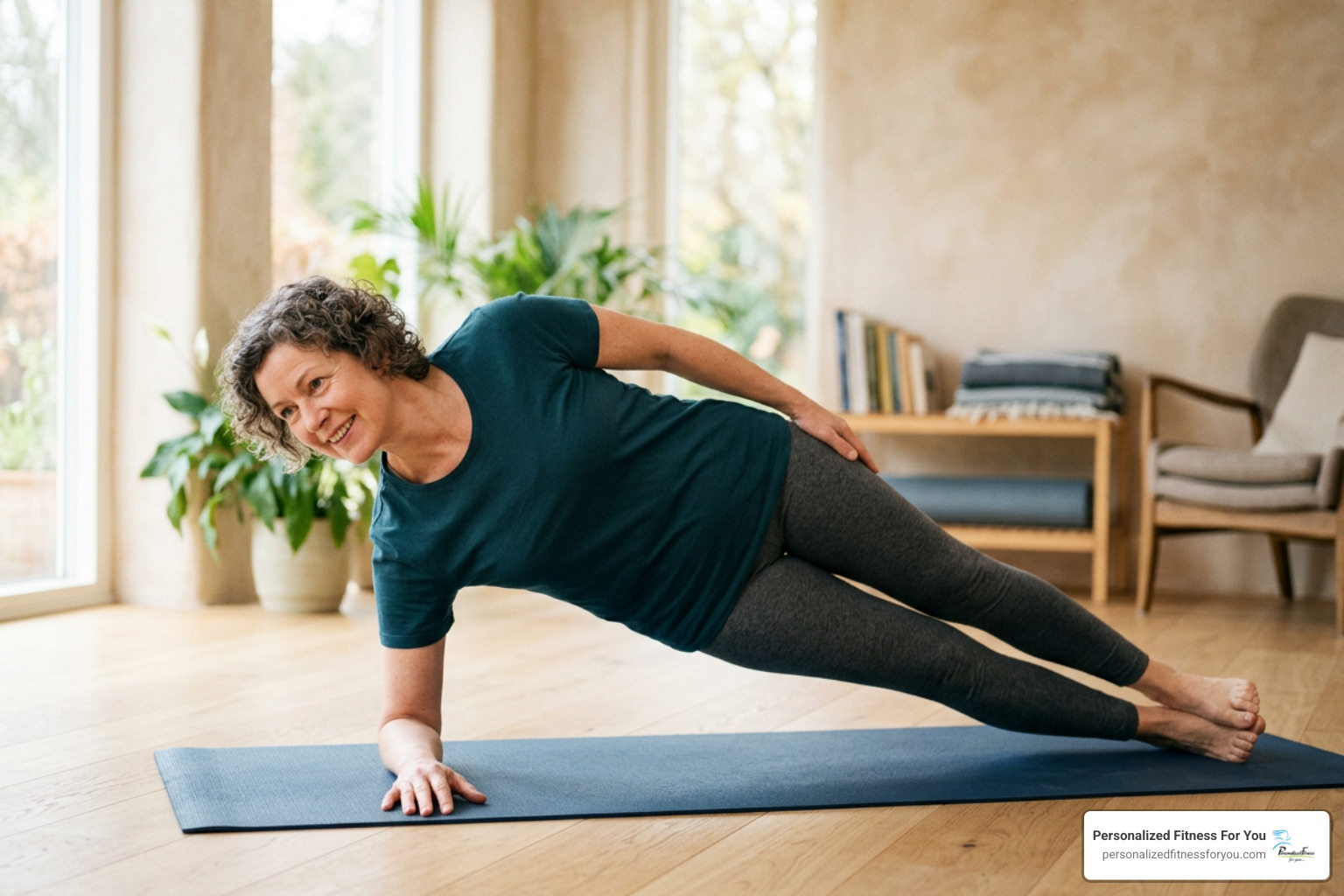
Lie on your side with your knees bent and your elbow positioned under your shoulder. Stack your hips and gently brace your core. Press through your forearm and lift your hips a few inches off the floor, keeping your knees on the mat. Hold briefly, then lower with control. Engage your core prior to the lift. Keep the engagement throughout the movement.
A modified side plank builds lateral stability, which helps protect your hips, pelvis, and lower back. This movement is a smart progression once traditional floor exercises begin to feel more comfortable.
5. Wall Plank
Stand facing a wall and place your hands on the wall at shoulder height. Step your feet back slightly so your body forms a long diagonal line. Engage your core, keep your shoulders relaxed, and hold the position while breathing steadily.
A wall plank is a gentle way to practice plank alignment without placing pressure on your wrists, knees, or lower back. It is an excellent entry point for anyone beginning a basic core workout and can be progressed over time by stepping farther from the wall or moving to a countertop plank.
Designing Your Routine: Frequency, Sets, and Static vs. Dynamic Balance
A balanced basic core workout pairs static stability with dynamic strength while allowing enough recovery time between sessions. For women balancing busy daily responsibilities, a beginner fitness routine should prioritize movement quality over high repetition counts.
| Exercise Type | Primary Benefit | Recommended Volume for Beginners | Focus Area |
|---|---|---|---|
| Static Holds (e.g., Forearm Plank, Dead Bug) | Improves muscular endurance and spinal stability | 2–3 sets of 15–30 second holds | Deep transverse abdominis & posture |
| Dynamic Movements (e.g., Bird Dog, Glute Bridge) | Enhances coordination and functional mobility | 2–3 sets of 8–12 repetitions per side | Glute engagement & diagonal stability |
Aim to perform your basic core workout two to three times per week on non-consecutive days. Giving your body recovery time between focused core sessions allows your muscles to repair, adapt, and rebuild safely. To build a solid foundation across all fitness components, check our 12-week strength foundation guide or explore our personalized fitness programs tailored specifically to your active aging journey.
Common Core Mistakes to Avoid and Safe Progression Tactics
When beginning a basic core workout, small adjustments in form can improve comfort, safety, and confidence. Here are common mistakes to keep in mind:
- Neck Strain: Pulling on your neck during floor work creates unnecessary tension. Keep your eyes focused slightly forward or toward the ceiling to keep your head aligned with your spine.
- Hip Sagging: Letting your lower back arch or sagging your hips during planks puts strain on your lumbar discs. If your hips sag, drop your knees to the mat to restore proper alignment.
- Holding Your Breath: Depriving your body of oxygen raises blood pressure and prevents deep core engagement. Practice continuous, deep breathing throughout each movement.
As your strength improves, progress your basic core workout gradually by increasing hold time, adding a set, or choosing a more challenging variation. You can increase hold times by five seconds, add a second set, or use core stability as a foundation for active goals such as jogging or light hiking. If you prefer expert oversight from the comfort of your living room, you can discover our virtual fitness training throughout the continental United States to receive personalized real-time feedback.
For additional clinical background on safe floor exercises, consult the Mayo Clinic guide to core strength.
Frequently Asked Questions About Core Fitness
How often should beginners do core exercises each week?
Beginners can start a basic core workout two to three times per week on non-consecutive days. This schedule provides adequate stimulus to build muscular endurance while ensuring your body receives enough rest to rebuild tissue and prevent overuse strain. Listen to your body and its cues and do what feels best for you when starting your fitness journey.
Can basic core workouts relieve lower back pain?
Yes. A gentle, beginner-friendly basic core workout can help stabilize the lower back, hips, and pelvis. By strengthening the deep transverse abdominis, glutes, and pelvic floor, you create natural spinal support that reduces pressure on vulnerable lower back joints during daily tasks.
What is the difference between superficial abs and deep core muscles?
Superficial abs, such as the rectus abdominis, sit on the outer surface of your abdomen and primarily flex your spine forward. Deep core muscles, including the transverse abdominis, multifidus, and pelvic floor, lie beneath the surface to wrap around your midsection, stabilizing your spine and supporting healthy posture.
Conclusion
Building a strong center through a tailored basic core workout can help you move through daily life with more comfort, stability, and confidence. By focusing on whole-istic health across spirit, mind, and body, you can support joint comfort, reduce everyday tension, and improve how confidently you move. Whether you are managing joint changes or simply looking to stay vibrant and mobile for years to come, taking gentle, consistent steps today lays the groundwork for lifelong vitality.
At Personalized Fitness For You, we are dedicated to providing compassionate, shame-free guidance tailored specifically to your active lifestyle. If you live locally, you can train with Joy at the studio in Winona Lake, Indiana, or access our expert instruction virtually throughout the continental United States. Ready to begin a basic core workout designed for your body and goals? Contact Personalized Fitness For You today to schedule a Personalized Fitness Assessment and take your first step toward a stronger, more resilient center.
2 Timothy 1:7 “For God has not given us a spirit of fear, but of power, of love and of a sound mind”. Starting something new can feel a little uncomfortable. Courage grows as we try. Lean on strength, as it can replace any fear that creeps in.